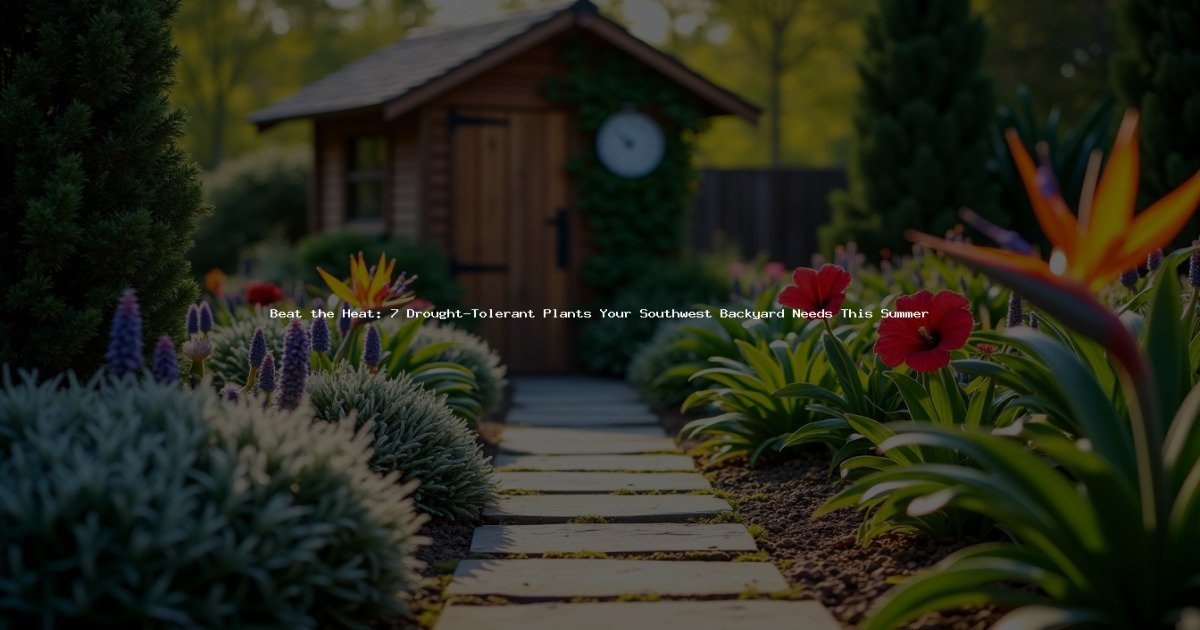
Beat the Heat: 7 Drought-Tolerant Plants Your Southwest Backyard Needs This Summer
Summer is here, and for many American homeowners, that means longer days, backyard barbecues, and… a rising dread of the water bill. Especially if you live in the sun-drenched Southwest, keeping your garden vibrant and green can feel like an uphill battle against scorching temperatures and dwindling water resources. You’ve probably spent countless hours dragging hoses, watching your favorite plants wilt under the relentless sun, and dreaming of a yard that thrives without constant attention. We get it. The struggle is real, and the desire for a beautiful, sustainable outdoor space is stronger than ever. But what if we told you that your dream of a stunning, water-wise backyard in Arizona, Nevada, Southern California, New Mexico, or even parts of Utah and West Texas isn’t just a pipe dream? What if you could have a landscape bursting with color and life, even when the mercury hits triple digits, all while being a responsible steward of our precious resources?
This June, as the summer sun blazes across USDA Zones 7b to 10b (and even some higher elevation pockets in 5b-6b), it’s time to rethink your gardening strategy. Forget the water-guzzling lawns and thirsty annuals that just can’t hack it. It’s time to embrace the incredible resilience and beauty of drought-tolerant plants. These aren’t just “cactus gardens” – though cacti have their place! We’re talking about a diverse palette of shrubs, perennials, and even small trees that have evolved to thrive in arid conditions, offering stunning blooms, unique textures, and a haven for local wildlife like hummingbirds and butterflies. Imagine stepping outside into a vibrant oasis, knowing that your plants are not just surviving, but flourishing, with minimal water. This isn’t just about saving money on your water bill; it’s about creating a landscape that truly belongs, that celebrates the unique beauty of the American Southwest, and that gives you peace of mind all summer long, from Memorial Day festivities to Labor Day relaxation. Let’s dive into the ultimate guide to transforming your backyard into a low-water paradise!
- Embrace Native & Adapted Plants: Choose species designed by nature to thrive in arid conditions.
- Smart Watering is Key: Deep, infrequent watering is more effective than shallow, frequent sprinkles.
- Mulch, Mulch, Mulch: A generous layer of mulch dramatically reduces water evaporation and suppresses weeds.
- Group Plants by Water Needs: Create “hydrozones” to ensure efficient watering.
- Consider Drip Irrigation: Direct water exactly where it’s needed, minimizing waste.
- Start Small, Think Big: Even a few well-chosen plants can make a huge impact on water savings and curb appeal.
1. The Ultimate Hummingbird Magnet: Baja Fairy Duster (Calliandra californica)
Why Your Southwest Yard Needs This Stunning Shrub
When the summer sun is at its fiercest, many plants retreat, but the Baja Fairy Duster truly shines. This captivating evergreen shrub, native to Baja California, Mexico, and well-adapted to the hot, dry conditions of the American Southwest (USDA Zones 9-11), is a true showstopper. Its delicate, fern-like foliage provides a soft, textural backdrop, but it’s the vibrant, fluffy, scarlet-red flowers that steal the show. Resembling miniature powder puffs or fireworks, these blooms appear almost year-round in mild climates, with an explosion of color from late spring through fall, making them a June superstar. Each flower is a cluster of long, prominent stamens that give it its distinctive “duster” look, and they are an absolute beacon for hummingbirds, who can’t resist their nectar-rich appeal. If you’re looking to attract these jewel-toned aerial acrobats to your backyard, the Baja Fairy Duster is an essential addition.
Easy Care for a Resilient Beauty
One of the best things about the Baja Fairy Duster is its incredibly low maintenance. Once established, it requires very little water, making it a perfect fit for a water-wise landscape. Plant it in full sun – at least 6-8 hours of direct sunlight per day is ideal – and well-draining soil. It can tolerate a variety of soil types, from sandy to rocky, as long as drainage is good. When planting, dig a hole twice as wide as the root ball and just as deep. Water deeply after planting and then regularly for the first few months to help it establish a strong root system. After establishment, deep watering once every 2-4 weeks during dry summer spells is usually sufficient. In cooler months or after significant rainfall, you might not need to water at all. Pruning is minimal; simply trim to maintain shape or remove any dead branches after the main bloom cycle. Fertilizing is rarely necessary, but a light application of a balanced, slow-release granular fertilizer in early spring can boost growth if your soil is poor. Look for a 10-10-10 or similar formula from trusted American brands like Miracle-Gro at Home Depot or compare options at Lowe’s. This plant typically grows to about 5-8 feet tall and wide, making it versatile for hedges, specimen planting, or mixed borders. Its resilience in temperatures up to 100°F and beyond makes it a smart choice for the intense Southwest summer.
2. The Desert’s Elegant Shade Tree: Desert Willow (Chilopsis linearis)
Beauty and Resilience in One Package
For those in the Southwest dreaming of a small tree that offers both stunning beauty and incredible drought tolerance, the Desert Willow is your answer. Despite its name, it’s not a true willow but a member of the Bignoniaceae family, related to catalpa. This fast-growing, deciduous tree or large shrub (USDA Zones 7-9) is a native gem, gracing landscapes across Arizona, New Mexico, Texas, and Southern California. Its narrow, bright green leaves give it a delicate, airy appearance, but it’s the spectacular trumpet-shaped flowers that truly captivate. Appearing from late spring through fall, with a peak performance in the hot summer months, these blooms come in shades of lavender, pink, magenta, and white, often with intricate streaks of yellow or purple in their throats. They are not only beautiful but also fragrant, attracting hummingbirds, bees, and butterflies, making your yard a buzzing hub of activity. The Desert Willow can grow to a mature height of 15-30 feet with a similar spread, offering welcome dappled shade during the relentless July and August heat.
Cultivating a Native Treasure
The Desert Willow is remarkably unfussy once established. It demands full sun – no less than 6 hours daily – and absolutely requires well-draining soil. It thrives in sandy, gravelly, or rocky soils, which are common in many Southwest regions. When planting, ensure the crown of the plant is at or slightly above soil level to prevent rot. Initial watering should be consistent, providing deep soaks every 5-7 days for the first growing season. After that, its water needs drop dramatically. Established trees can often subsist on natural rainfall, requiring supplemental watering only during extended periods of extreme drought (e.g., if you haven’t seen rain in over a month and temperatures are consistently above 95°F). When you do water, water deeply to encourage deep root growth, rather than frequent shallow sprinkles. Pruning is best done in late winter or early spring before new growth begins. You can shape it as a multi-trunked shrub or train it into a single-trunked tree. Remove any dead, damaged, or crossing branches, and thin out the canopy to improve air circulation. Fertilization is generally unnecessary; these plants are adapted to nutrient-poor soils. You can find Desert Willow saplings at local nurseries specializing in native plants, or sometimes through online retailers like Arbor Day Foundation. For tools, consider a sturdy pruning saw or loppers from Home Depot or Lowe’s to manage its growth effectively.
3. The Iconic Desert Sentinel: Red Yucca (Hesperaloe parviflora)
Architectural Beauty with Unbeatable Toughness
No Southwest garden would be complete without the iconic Red Yucca. This evergreen succulent perennial (USDA Zones 6-10) is a true workhorse, offering year-round interest with its striking architectural form and vibrant summer blooms. Despite its common name, Red Yucca isn’t a true yucca but a member of the Agave family. It forms a graceful clump of long, narrow, grass-like leaves that are typically blue-green, sometimes with reddish margins. From spring through fall, but especially prolifically in June, July, and August, tall flower stalks emerge, reaching 3-5 feet high, adorned with dozens of coral-pink to reddish-orange, bell-shaped flowers. These blooms are a magnet for hummingbirds and other pollinators, adding dynamic life to your static landscape. Red Yucca is incredibly versatile, suitable for mass plantings, rock gardens, containers, or as a striking specimen plant. Its compact size, typically 2-3 feet tall and wide, makes it perfect for smaller spaces or along pathways where its spiky yet soft texture can be appreciated.
Effortless Care for a Low-Water Landscape
If you’re looking for a plant that practically cares for itself, the Red Yucca is it. It thrives in full sun – the more sun, the better the bloom production – and requires exceptionally well-draining soil. It’s perfectly happy in sandy, rocky, or even clay soils, as long as they don’t hold standing water. Once established, Red Yucca is incredibly drought tolerant, needing very little supplemental water. During the hottest summer months, a deep watering every 3-4 weeks might be beneficial, but often natural rainfall is sufficient. Overwatering is the quickest way to kill this plant, so err on the side of underwatering. It’s also incredibly cold hardy, tolerating temperatures down to 0°F, which extends its range beyond the typical Southwest desert core. Maintenance is minimal: simply snip off spent flower stalks near the base once they’ve finished blooming to encourage new flushes. This plant is virtually pest and disease-free, making it a dream for the busy gardener. For planting, you can find Red Yucca plants readily available at Home Depot, Lowe’s, or local nurseries. When purchasing, look for healthy, compact plants. Consider pairing it with other low-water plants like Agave or Salvia for a cohesive, water-wise design. Check out our guide on creating a low-water garden design here.
4. The Sculptural Survivor: Agave (Agave americana and related species)
Bold Forms for a Modern Desert Aesthetic
Agaves are the quintessential Southwest plant, renowned for their dramatic, sculptural forms and unparalleled drought tolerance. With hundreds of species ranging from small, desktop-sized varieties to towering giants, there’s an Agave for almost every garden in USDA Zones 8-11. The most common, Agave americana, also known as Century Plant, forms massive rosettes of blue-green, often spiny, leaves that can reach 5-6 feet tall and wide. But don’t limit yourself! Consider smaller, more manageable species like Agave parryi (Artichoke Agave), Agave vilmoriniana (Octopus Agave) with its twisting leaves, or the compact Agave victoriae-reginae (Queen Victoria Agave) for intricate patterns. Agaves add an incredible architectural element to any landscape, providing year-round interest and a strong focal point. While they famously bloom only once in their lifetime (often after 10-30 years, hence “Century Plant”), sending up a magnificent flower stalk that can soar 10-20 feet high, their foliage alone is enough to make them a star. Their robust nature means they thrive even in the most intense summer heat, making them a cornerstone of a truly resilient Southwest backyard.
Proven Care for a Timeless Classic
Agaves are incredibly easy to care for, provided you meet their fundamental needs: full sun and excellent drainage. They must have at least 6 hours of direct sunlight daily to thrive and prevent etiolation (stretching). For soil, think rocky, sandy, or gravelly – anything that doesn’t hold water. If your soil is heavy clay, amend it generously with coarse sand or decomposed granite to improve drainage, or consider planting in raised beds. When planting, dig a hole slightly wider than the root ball and ensure the crown is at or slightly above soil level. After planting, water sparingly to settle the soil. Once established, Agaves are extremely drought tolerant and generally need no supplemental water, even during the hottest summer months, unless you’re experiencing an exceptionally prolonged drought. Overwatering is the biggest killer of Agaves, leading to root rot. They are also virtually pest-free, though occasional agave snout weevil can be an issue in some areas – inspect regularly. Fertilization is generally unnecessary, as they are adapted to nutrient-poor soils. The main maintenance task involves removing old, dead leaves at the base as the plant grows, which can be done with a sharp knife or saw. Be mindful of the sharp spines on many varieties; wear sturdy gloves and eye protection when handling. You can find a wide variety of Agave species at specialty succulent nurseries, or often larger specimens at Home Depot or Lowe’s garden centers. For smaller, unique varieties, online retailers like Mountain Crest Gardens offer a fantastic selection. Remember that many Agaves produce “pups” or offsets around their base, which can be easily detached and replanted to expand your collection or share with friends.
5. The Ever-Blooming Powerhouse: Lantana (Lantana camara and hybrids)
Vibrant Hues for Non-Stop Summer Color
If you crave continuous, vibrant color in your Southwest garden from late spring all the way through fall, even in the scorching heat of July and August, then Lantana is your absolute must-have. This cheerful, fast-growing shrub (USDA Zones 8-11, often grown as an annual in cooler zones) is a true powerhouse, producing an endless parade of small, clustered flowers in a breathtaking array of colors: yellow, orange, red, pink, purple, and often multi-colored blooms on the same plant. The flowers are not only beautiful but also slightly fragrant and irresistible to butterflies, making your garden a lively, fluttering spectacle. Lantana typically grows 2-6 feet tall and wide, depending on the variety, and can have an upright or mounding, spreading habit. There are also trailing varieties perfect for spilling over retaining walls or out of containers. Its rough, dark green leaves are also aromatic when bruised. Its ability to laugh in the face of intense heat and dry conditions makes it an unparalleled choice for a Southwest summer landscape.
Smart Care for Prolific Blooms
Lantana thrives in full sun – at least 6-8 hours daily – and well-draining soil. It’s not particular about soil type, tolerating sandy, loamy, or even somewhat rocky conditions, as long as it doesn’t stay waterlogged. When planting, space them according to their mature size to ensure good air circulation. Water regularly after planting to help them establish, providing deep soaks every few days for the first few weeks. Once established, Lantana is incredibly drought tolerant. While it will survive on minimal water, a deep watering every 1-2 weeks during prolonged dry spells in summer will encourage more prolific blooming. Avoid overhead watering, which can sometimes lead to powdery mildew in humid conditions. Pruning is simple: a light trim after a flush of blooms will encourage more flowering. In early spring, before new growth begins, you can cut back established plants by up to one-third to maintain shape and vigor. Fertilization is generally not required for established plants, especially in rich soil, but if your soil is poor, a light application of a balanced, slow-release granular fertilizer (e.g., 5-10-5 or 10-10-10) in spring can be beneficial. Lantana is widely available at Home Depot, Lowe’s, and virtually all garden centers across the US. Look for popular varieties like ‘Dallas Red,’ ‘Bandana,’ or ‘Confetti’ for reliable performance. Be aware that some Lantana species can be invasive in very warm, humid climates, so choose sterile or less aggressive cultivars if you are concerned. For most of the arid Southwest, this is less of an issue, but always good to check local recommendations. Discover more butterfly-attracting plants in our comprehensive guide.
6. The Striking Desert Icon: Ocotillo (Fouquieria splendens)
A Unique Silhouette for a Truly Southwestern Vibe
For gardeners looking to make a bold, unequivocally Southwestern statement, the Ocotillo is an absolute must-have. This remarkable native plant (USDA Zones 8-11) is unlike any other, with its distinctive upright, cane-like stems that can reach 10-20 feet tall. For much of the year, especially during dry periods, the Ocotillo appears as a collection of woody, spiny sticks, seemingly lifeless. But don’t be fooled! After rainfall, or with a bit of supplemental water, small, bright green leaves quickly emerge along the stems, transforming its appearance. Its most spectacular display comes in spring and early summer (often starting in April and continuing through June), when the tips of its canes erupt with brilliant clusters of tubular, fiery red-orange flowers. These blooms are an absolute magnet for hummingbirds, turning your desert landscape into a vibrant feeding ground. The Ocotillo’s striking silhouette, especially against a sunset, is truly iconic and adds an unparalleled architectural element to any drought-tolerant garden, perfectly encapsulating the rugged beauty of the Sonoran and Chihuahuan deserts.
Resilient Care for a Living Sculpture
The Ocotillo is a plant of extremes, perfectly adapted to the arid Southwest. It demands full sun – at least 8 hours daily – and exceptionally well-draining, rocky, or sandy soil. It absolutely will not tolerate heavy clay or standing water, which will lead to root rot. When planting, it’s crucial to plant Ocotillo bare-root, or if container-grown, ensure the root crown is at or slightly above the soil line. Water deeply once every 2-4 weeks during its first year to help it establish. Once established, Ocotillo requires very little supplemental water, often thriving on natural rainfall alone. During extended droughts in summer, a deep watering once a month can be beneficial, but again, err on the side of too little water rather than too much. Pruning is generally not needed except to remove any dead or damaged canes at the base. Be cautious when handling due to its sharp spines! This plant is incredibly long-lived, sometimes surviving for over a century. It’s also remarkably pest and disease-free. You’ll typically find Ocotillo available at nurseries specializing in native desert plants, especially in Arizona, New Mexico, and Southern California. When buying, ensure the plant has a healthy root ball and green tips on its canes, indicating vitality. Consider planting it as a dramatic backdrop or a unique living fence. Pair it with lower-growing succulents like Agave or Cacti for a truly authentic desert garden experience.
7. The Versatile Pollinator Paradise: Salvia (Salvia greggii, microphylla, and many others)
Endless Blooms and Fragrance for Your Backyard
Salvia, commonly known as Sage, is an incredibly diverse genus, and many species are perfectly suited for the hot, dry conditions of the American Southwest. For continuous summer color and an irresistible draw for hummingbirds and butterflies, look no further than varieties like Autumn Sage (Salvia greggii) or Littleleaf Sage (Salvia microphylla). These semi-evergreen perennials (USDA Zones 7-10) offer a seemingly endless display of tubular flowers in shades of red, pink, purple, white, and even bi-colors, blooming profusely from spring through fall, making them a true summer workhorse. Growing typically 2-4 feet tall and wide, they form attractive, bushy mounds with small, aromatic leaves that release a pleasant scent when brushed. Their versatility makes them ideal for mixed borders, rock gardens, mass plantings, or even containers, adding both beauty and beneficial wildlife to your backyard. With so many drought-tolerant varieties available, you can easily find a Salvia to fit any color scheme or design aesthetic, ensuring your garden remains vibrant even when temperatures soar to 100°F or more in July and August.
Effortless Growth and Vibrant Returns
Drought-tolerant Salvias are remarkably easy to grow, preferring full sun (at least 6 hours daily) and well-draining soil. They are not fussy about soil type, thriving in everything from sandy to rocky loam, as long as it’s not waterlogged. When planting, ensure good air circulation around the plants. Water regularly for the first few months to establish a strong root system, providing deep soaks when the top few inches of soil are dry. Once established, their water needs drop significantly. During hot summer months, a deep watering every 2-3 weeks is usually sufficient, though they can often survive on less once mature. Overwatering, especially in cooler weather, can lead to root rot. Pruning is key to maintaining vigor and encouraging continuous blooms. Give them a light trim after each major flush of flowers to remove spent blooms and shape the plant. In late winter or early spring, before new growth starts, you can prune them back by one-third to one-half to rejuvenate the plant. Fertilization is rarely needed; Salvias generally perform best in lean soil. If your soil is very poor, a light application of a balanced, slow-release fertilizer in early spring can be beneficial. You can find a wide selection of Salvias at Home Depot, Lowe’s, local nurseries, and reputable online seed and plant companies like Burpee or Park Seed. Look for specific drought-tolerant varieties like ‘Hot Lips,’ ‘Mesa Azure,’ or ‘Maraschino’ for reliable performance in the Southwest. These plants are relatively pest and disease-free, making them a low-stress addition to your garden.
Essential Tools & Techniques for a Thriving Southwest Garden
Beyond choosing the right plants, having the right tools and employing smart techniques are crucial for success in the Southwest. Here’s a look at some recommended products and practices:
| Product / Technique | Best For | Price Range | Where to Buy | Rating |
|---|---|---|---|---|
| Drip Irrigation System Kit | Targeted, efficient watering for beds & containers. Reduces evaporation. | $50 – $200+ | Home Depot, Lowe’s, Amazon US | ★★★★★ |
| Smart Irrigation Controller | Automating watering based on weather, soil, and plant needs. Saves water & time. | $80 – $300 | Amazon US, Home Depot, Lowe’s | ★★★★☆ |
| Organic Compost / Soil Conditioner | Improving soil structure, water retention (just enough!), and drainage in native soils. | $5 – $15 per bag | Local Nurseries, Home Depot, Lowe’s | ★★★★★ |
| Horticultural Grade Mulch (e.g., Shredded Cedar, Decomposed Granite) | Suppressing weeds, retaining soil moisture, regulating soil temperature. | $3 – $10 per bag/cu. ft. | Home Depot, Lowe’s, Local Landscape Suppliers | ★★★★★ |
| Moisture Meter | Accurately checking soil moisture levels before watering. Prevents over/underwatering. | $10 – $30 | Amazon US, Home Depot | ★★★★☆ |
Expert Tips for a Water-Wise Southwest Summer Garden
Beyond choosing the right plants, how you care for them makes all the difference. Here are over 10 expert tips to help your Southwest garden thrive this summer, saving water and keeping your plants happy:
- Mulch Heavily: Apply a 2-4 inch layer of organic mulch (like shredded bark, wood chips, or straw) or inorganic mulch (like decomposed granite or gravel) around your plants. This dramatically reduces water evaporation from the soil, suppresses weeds, and moderates soil temperature, keeping roots cooler in summer.
- Water Deeply and Infrequently: Instead of light, daily sprinkles, water less often but for longer periods. This encourages roots to grow deeper, making plants more resilient to drought.
- Water in the Early Morning: Watering before 8 AM minimizes water loss due to evaporation from the hot sun and strong winds. It also allows foliage to dry before nightfall, reducing fungal disease risk.
- Group Plants by Water Needs (Hydrozoning): Place plants with similar water requirements together. This allows you to water different zones of your garden precisely and efficiently, preventing over or underwatering.
- Install Drip Irrigation: Drip systems deliver water directly to the root zone, minimizing waste from overspray and evaporation. It’s far more efficient than traditional sprinklers for most drought-tolerant plants.
- Check Soil Moisture Before Watering: Don’t just water on a schedule. Use a soil moisture meter or simply stick your finger into the soil a few inches deep. If it feels moist, wait.
- Embrace Native and Adapted Plants: Prioritize plants that are indigenous to your region or have adapted to similar arid climates. They are naturally suited to the local climate and soil conditions, requiring less intervention.
- Improve Soil Drainage: Most drought-tolerant plants hate “wet feet.” If you have heavy clay soil, amend it with organic compost, sand, or gravel to improve drainage before planting.
- Provide Shade for New Plants: Young plants are more vulnerable to intense summer sun. Use shade cloth or temporary structures to protect them during their first summer, especially if planted in June or July.
- Harvest Rainwater: Install rain barrels to collect rainwater from your roof. This provides a free, natural water source for your plants, especially valuable for container gardens or supplemental watering.
- Monitor for Pests and Diseases: Drought-stressed plants can sometimes be more susceptible to pests. Regularly inspect your plants and address any issues promptly with organic solutions when possible.
- Consider a Smart Controller: Upgrade your irrigation system with a smart controller that adjusts watering schedules based on local weather forecasts, soil type, and plant needs, maximizing efficiency.
Frequently Asked Questions About Southwest Drought-Tolerant Gardening
What does “drought-tolerant” really mean for my Southwest garden?
Drought-tolerant means a plant can survive and often thrive with minimal water once established, typically requiring little to no supplemental irrigation beyond natural rainfall. In the Southwest, this translates to plants that can withstand long periods of dry weather and intense summer heat without wilting or dying, significantly reducing your water usage compared to traditional landscape plants.
Can I still have a colorful garden with drought-tolerant plants?
Absolutely! As this article highlights, many drought-tolerant plants, like Lantana, Salvia, and Desert Willow, offer a spectacular array of colors and bloom for extended periods. You can create a vibrant, dynamic landscape that’s just as colorful, if not more so, than a water-intensive garden, all while being sustainable.
When is the best time to plant drought-tolerant plants in the Southwest?
The ideal time to plant drought-tolerant plants in the Southwest is generally in the fall (September-November) or early spring (March-April). This allows plants to establish a strong root system during cooler temperatures before the intense summer heat arrives. However,