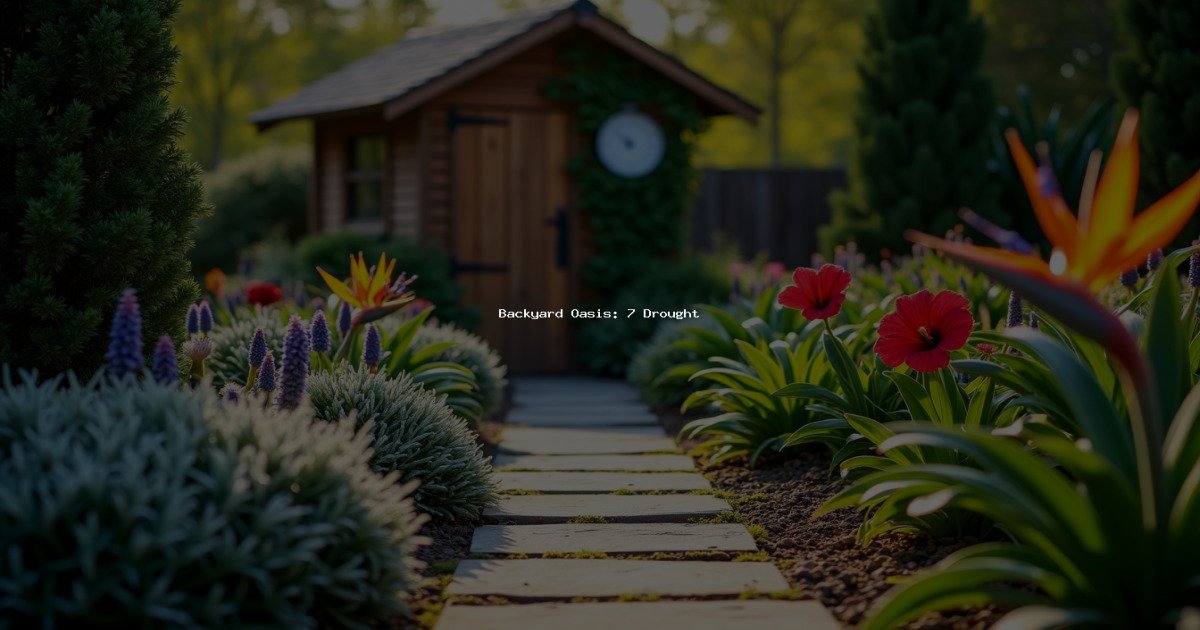
Backyard Oasis: 7 Drought-Defying Secrets for a Lush, Water-Wise Garden This Summer
Key Takeaways for Your Drought-Proof Garden
- Smart Soil Prep: Build a foundation with organic matter to retain precious moisture.
- Native & Adapted Plants: Choose plants that naturally thrive in your USDA zone’s climate.
- Succulent & Mediterranean Power: Embrace low-water beauties that deliver big impact.
- Precision Watering: Ditch the sprinklers for efficient drip systems and smart controllers.
- Mulch is Your MVP: A thick layer of mulch drastically reduces evaporation.
- Harvest Rainwater: Capture free water with rain barrels and simple systems.
- Strategic Design: Group plants by water needs and utilize shade for microclimates.
Ah, summer in America! The smell of freshly cut grass, backyard barbecues, and long, sun-drenched days. For many of us, June marks the true beginning of the gardening season, a time when our green dreams really start to take shape. But let’s be honest, those beautiful summer days often come with a challenge: the relentless heat and, increasingly, the specter of drought. Whether you’re in the sun-baked Southwest, the intermittently dry Midwest, or even parts of the typically lush Northeast experiencing unusual dry spells, conserving water in your garden isn’t just a good idea – it’s becoming a necessity. And for our friends out in California and Texas, it’s a way of life.
The good news? You don’t have to sacrifice your vision of a vibrant, inviting backyard oasis just because you want to be water-wise. In fact, some of the most stunning gardens are those designed to thrive with minimal supplemental irrigation. Imagine a garden that looks fantastic even when the thermostat hits 90 or 100 degrees Fahrenheit, a garden where your water bill doesn’t skyrocket, and where you can truly relax and enjoy nature’s beauty without constant worry. This isn’t just a pipe dream; it’s an achievable reality for every American homeowner, no matter your USDA hardiness zone, from Zone 3 in Montana to Zone 10 in Florida.
We’ve all been there: staring at wilted plants, feeling the guilt of a constantly running sprinkler, or simply wishing our garden could handle a few less gallons of water each week. With climate patterns shifting, ensuring our landscapes are resilient and sustainable is more important than ever. From the high deserts of Arizona to the coastal plains of Georgia, and from the Great Lakes region to the Pacific Northwest, understanding how to create a drought-defying garden will empower you to cultivate beauty and embrace environmental responsibility.
This comprehensive guide is your ultimate toolkit for transforming your yard into a water-wise paradise. We’ll dive deep into seven proven secrets that top gardeners use to keep their landscapes thriving, even when Mother Nature turns off the tap. We’ll explore everything from smart soil preparation and choosing the right plants for your specific region, to innovative irrigation techniques and clever design strategies. Get ready to discover American-made products, actionable advice tailored for your part of the continental USA, and expert tips that will make your garden the envy of the neighborhood – all while saving water and money. Let’s make this summer the season your backyard oasis truly shines, sustainably!
The Ultimate Foundation: Crafting Drought-Resilient Soil
Before you even think about planting a single seed or shrub, the secret to a drought-defying garden begins beneath your feet: with your soil. Healthy soil is like a sponge, capable of holding vast amounts of water and nutrients, making it the absolute MVP in any water-wise landscape. In many parts of the US, especially where native soils are clay-heavy or overly sandy, improving your soil structure is a non-negotiable first step. For gardeners in the arid Southwest, sandy soils drain too quickly, while those in parts of the Midwest with heavy clay can struggle with compaction and poor drainage, both leading to inefficient water use.
The magic ingredient? Organic matter. Think compost, well-rotted manure, or leaf mold. Incorporating 3-4 inches of this goodness into the top 6-12 inches of your garden beds will dramatically improve your soil’s ability to retain moisture. For instance, a cubic foot of organic matter can hold several gallons of water! This is particularly crucial as summer temperatures climb in June, increasing evaporation. For a typical 10×10 foot garden bed, you’d be looking at about 25-30 cubic feet of compost – easily available in bags or by the yard from your local garden center or even Home Depot or Lowe’s. This investment upfront will pay dividends in water savings and healthier plants for years to come.
Consider also the benefits of raised garden beds, especially for smaller spaces or areas with notoriously poor native soil. Raised beds allow you to fill them with a custom blend of topsoil, compost, and other amendments, giving your plants an ideal environment. For those in regions with high rainfall variability, like the Southeast, raised beds can also improve drainage during wet spells while still retaining moisture during dry periods if properly amended. For instance, a 4×8 foot raised bed could easily be filled with a blend containing 50% good quality topsoil and 50% compost, costing around $100-$200 for the soil mix alone, plus the cost of the bed kit.
Supercharge Your Soil with Smart Amendments
- Compost: The gold standard. Improves structure, adds nutrients, and boosts water retention. Buy it bagged from your local nursery or in bulk from a landscape supply yard.
- Aged Manure: Similar benefits to compost, but often richer in nutrients. Ensure it’s fully composted to avoid burning plants.
- Biochar: A charcoal-like substance that can permanently improve soil structure and water retention. A small bag (10 lbs) from Amazon US can treat a significant area.
- Worm Castings: Nutrient-dense and excellent for soil health, improving water infiltration and retention.
For gardeners in the desert Southwest, adding gypsum can sometimes help improve clay soils, but always test your soil first. A simple soil test kit, available at most American garden stores or through your local university extension office, can tell you exactly what your soil needs. Knowing your soil pH and nutrient levels empowers you to make targeted improvements, ensuring your plants get exactly what they need without excessive watering.
Smart Plant Power: Embrace Native & Adapted Wonders
One of the most effective strategies for a drought-defying garden is to choose plants that are naturally suited to your local climate and conditions. This often means embracing native plants or those that are well-adapted to similar environments. Why fight nature when you can work with it?
Native plants are truly the champions of water conservation. They’ve evolved over thousands of years to thrive in your specific region’s rainfall patterns, soil types, and temperature extremes. This means they generally require less supplemental water, are more resistant to local pests and diseases, and provide vital habitat for local wildlife like pollinators and birds. For gardeners in the Pacific Northwest, plants like Oregon Grape (Mahonia aquifolium) or Sword Fern (Polystichum munitum) are excellent choices. In the Northeast, consider Eastern Redbud (Cercis canadensis) or Coneflower (Echinacea purpurea). For the Southeast, think about beautyberry (Callicarpa americana) or various types of Sedum that are native to the region. Even the vast Midwest has a wealth of prairie plants like various bluestems and switchgrass that are incredibly resilient once established.
Adapted plants, while not native, come from regions with similar climates to yours. For example, many plants from the Mediterranean basin or the dry steppes of Eurasia thrive in California’s climate. In June, when many native plants are in full bloom or setting seed, choosing adapted plants can extend your garden’s visual interest without increasing its water footprint.
Regional Plant Picks for Water-Wise Gardens
- Southwest (e.g., Arizona, New Mexico): Agave, Yucca, Prickly Pear Cactus, Desert Marigold, Palo Verde trees. These plants are built for intense sun and minimal rainfall, often boasting thick leaves or waxy coatings to reduce water loss.
- California (Mediterranean climate): California Poppy, Ceanothus (California Lilac), Manzanita, Monkeyflower. Many of these are available from local native plant nurseries.
- Texas (diverse climates): Cenizo (Texas Sage), Autumn Sage, Turk’s Cap, Blackfoot Daisy. These tough plants handle both heat and varying rainfall.
- Southeast (e.g., Georgia, Florida): Coontie, Muhly Grass, Passionflower, Yaupon Holly. While humid, dry spells are common, and these plants are robust.
- Northeast (e.g., New York, Pennsylvania): Wild Geranium, Virginia Creeper, Butterfly Weed, various native ferns. Even though rainfall is generally higher, these plants can handle summer droughts.
- Midwest (e.g., Kansas, Illinois): Purple Coneflower, Black-Eyed Susan, Liatris (Gayfeather), Big Bluestem. Prairie plants are incredibly tough and beautiful.
- Pacific Northwest (e.g., Oregon, Washington): Salal, Kinnikinnick, various native sedges. These plants are accustomed to dry summers after wet winters.
When shopping, look for regional native plant sales, check with your local university extension office for plant lists, or visit reputable American seed companies like Burpee, Baker Creek Heirloom Seeds, or Park Seed for drought-tolerant varieties. Always choose plants suited to your specific USDA zone and microclimate. A healthy, established native plant will need far less water than a thirsty non-native, making your summer gardening much more enjoyable.
Succulent & Cacti Sanctuary: Low-Water Beauties for Every Zone
When you think of drought-tolerant plants, succulents and cacti are often the first to come to mind, and for good reason! These incredible plants are masters of water storage, with specialized leaves, stems, or roots that allow them to thrive in arid conditions. Beyond their impressive resilience, they offer an astonishing array of textures, shapes, and colors, making them perfect for creating striking, low-maintenance displays in any backyard oasis, even outside traditional desert regions.
While many associate succulents and cacti with the Southwest, there are hardy varieties available for almost every USDA zone in the US. For instance, many types of Sedum and Sempervivum (often called Hens and Chicks) are cold-hardy down to Zone 3, meaning gardeners in Minnesota or Maine can enjoy them outdoors year-round. These tough little plants are perfect for rock gardens, containers, or as groundcovers, requiring very little attention once established, especially during the hot summer months.
For those in warmer zones (Zone 7 and up), the options expand dramatically. Agaves, Echeverias, Aloes, and various types of Opuntia (Prickly Pear) can create dramatic focal points or fill large areas with stunning architecture. Imagine a container display near your patio featuring a bold Agave surrounded by trailing Sedum, requiring watering only every few weeks, even in July’s heat. This is the essence of a water-wise, low-effort garden.
Popular & Resilient Succulent/Cactus Choices
- Sedum ‘Autumn Joy’ (Zones 3-9): A classic, robust succulent that offers late-season blooms, attracting pollinators.
- Sempervivum (Hens and Chicks) (Zones 3-8): Perfect for rock gardens, crevices, and containers, forming charming rosettes.
- Yucca (Zones 4-10): Offers dramatic architectural form with sword-like leaves. Many varieties are extremely cold-hardy.
- Agave (Zones 7-11, depending on species): Stunning rosettes, perfect for dramatic focal points. Smaller varieties can be container-grown and brought indoors in colder climates.
- Opuntia (Prickly Pear Cactus) (Zones 4-11, depending on species): Surprisingly cold-hardy, offering unique pads and often edible fruits.
- Lavender (Zones 5-9): While not a succulent, this Mediterranean marvel has similar low-water needs and pairs beautifully with succulents. We’ll cover more Mediterranean plants in the next section.
When planting succulents and cacti, ensure excellent drainage is paramount. Use a specialized cactus and succulent potting mix, or amend your garden soil with plenty of perlite or pumice (available at Lowe’s or Home Depot) to prevent root rot. During June and July, when temperatures are high, established succulents generally only need watering every 2-4 weeks, or even less, depending on rainfall and humidity. Always allow the soil to dry out completely between waterings. This “neglect” is exactly what these plants crave, making them ideal for gardeners looking to reduce their water usage and maintenance time.
Mediterranean Marvels: Herbs & Shrubs That Thrive on Neglect
Beyond succulents, another fantastic category of plants for a drought-defying oasis comes from the Mediterranean region. Think of the sun-drenched hillsides of Italy, Greece, or Spain – these plants have evolved to handle hot, dry summers and relatively mild, wet winters. Their adaptations often include small, silvery, or fuzzy leaves to reduce water loss, deep root systems, and a natural resilience to periods of drought. For American gardeners, especially those in USDA Zones 7-10, these plants are a game-changer for creating beautiful, fragrant, and low-water landscapes.
Herbs like Lavender, Rosemary, Thyme, and Oregano are quintessential Mediterranean plants. Not only do they smell incredible and offer culinary uses, but they also thrive on minimal water once established. Imagine a fragrant border of Lavender ‘Hidcote’ or ‘Munstead’ lining a path, attracting bees and butterflies all summer long, while requiring watering only during prolonged dry spells. These plants prefer full sun and well-drained soil, making them perfect companions for many of the succulents and native plants we’ve already discussed. A 6-inch pot of Rosemary from Home Depot typically costs around $10-$15 and will quickly grow into a substantial, drought-tolerant shrub.
Beyond herbs, many shrubs and perennials from the Mediterranean region offer structure, color, and texture with minimal water needs. Oleander (Nerium oleander), while toxic if ingested, is a common sight in warm climates like California and the Southeast, blooming profusely with little care. Cistus (Rockrose) offers delicate, papery flowers and thrives in poor, dry soils. Even many varieties of Santolina (Cotton Lavender) provide silvery foliage and cheerful yellow button flowers, perfect for borders or mass plantings.
Top Mediterranean Choices for Your Garden
- Lavender (Lavandula spp.) (Zones 5-9): Fragrant, beautiful, and a pollinator magnet. Prefers full sun and excellent drainage.
- Rosemary (Rosmarinus officinalis) (Zones 7-10, some varieties hardier): Culinary herb with evergreen foliage and delicate blue flowers. Can grow into a large shrub.
- Thyme (Thymus spp.) (Zones 4-9): Groundcover or upright varieties, all highly drought-tolerant and fragrant.
- Oleander (Nerium oleander) (Zones 8-10): Large, showy shrub with abundant flowers in white, pink, or red. Extremely tough once established.
- Cistus (Rockrose) (Zones 7-10): Evergreen shrubs with delicate flowers, perfect for dry, sunny slopes.
- Santolina (Santolina chamaecyparissus) (Zones 6-9): Silvery foliage and yellow flowers, excellent for texture and contrast.
- Russian Sage (Perovskia atriplicifolia) (Zones 4-9): A true workhorse, offering airy blue flowers and silvery foliage, thriving in hot, dry conditions.
These plants are fantastic for adding structure and continuous color throughout the summer, especially as June turns into July and August, when many spring bloomers fade. When purchasing, look for healthy specimens at your local nursery or from online retailers like Nature Hills Nursery or Annie’s Annuals & Perennials, both known for their wide selection of drought-tolerant and adapted plants. Remember, the key is proper establishment – water them regularly for their first growing season, then gradually reduce watering as their root systems develop. Soon, they’ll be thriving on their own, transforming your backyard into a Mediterranean-inspired retreat.
Precision Watering: Revolutionizing Your Irrigation Strategy
Even with the most drought-tolerant plants and impeccably prepared soil, some supplemental watering will likely be necessary, especially during extended dry spells or for newly established plants. The key is to water smart, not just water more. Traditional overhead sprinklers are often inefficient, losing a significant amount of water to evaporation, wind drift, and runoff before it even reaches the plant’s root zone. This is where precision watering techniques come into play, revolutionizing how you hydrate your backyard oasis.
Drip irrigation systems are arguably the most efficient way to water your garden. They deliver water directly to the plant’s root zone, drop by drop, minimizing waste. A basic drip kit for a small garden bed can be purchased for around $50-$100 at Home Depot or Lowe’s, and installation is surprisingly straightforward for the DIY enthusiast. These systems can reduce water usage by 30-50% compared to sprinklers. For larger areas or vegetable gardens, soaker hoses are another excellent option, slowly weeping water along their entire length. They are inexpensive (a 50-foot hose costs about $15-$25) and easy to lay out, especially around established plants.
Smart irrigation controllers take efficiency to the next level. These devices connect to your Wi-Fi and use local weather forecasts, soil moisture sensors, and plant-specific data to automatically adjust your watering schedule. Instead of watering on a fixed timer, a smart controller might skip a cycle if rain is predicted or if the soil is already moist, saving thousands of gallons of water over a season. Brands like Rachio or Orbit B-Hyve are popular choices, with controllers ranging from $100-$300, a worthy investment for significant water savings and convenience.
Mastering Your Watering Techniques
- Water Deeply, Infrequently: Instead of light, daily sprinkles, aim for longer, less frequent watering sessions. This encourages plants to develop deep root systems, making them more resilient to drought. For most established plants, a good deep soak once a week (delivering about 1 inch of water) is far better than daily shallow watering.
- Water in the Early Morning: This minimizes evaporation and allows the water to penetrate the soil before the sun gets too intense. Watering in the evening can encourage fungal diseases due to prolonged leaf wetness.
- Group Plants by Water Needs: This is known as hydrozoning. Place plants with similar water requirements together. Your thirsty annuals can be in one zone, while your drought-tolerant shrubs are in another, allowing you to water each zone appropriately.
- Use Rain Gauges: A simple rain gauge (available for a few dollars at any garden center) can help you track natural rainfall, so you know when to supplement and when to hold off.
- Check Soil Moisture: Don’t just water because the calendar says so. Stick your finger 2-3 inches into the soil. If it feels dry, it’s time to water. If it’s moist, wait. This is especially important for container plants.
By combining efficient irrigation systems with smart watering practices, you’ll be well on your way to a truly water-wise garden. Remember, the goal isn’t to stop watering entirely, but to ensure every drop counts, especially as we head into the driest parts of the summer in July and August. This approach will not only conserve water but also promote healthier, more robust plants that can better withstand periods of stress.
Mulch Magic & Strategic Hardscaping: Locking in Moisture
After you’ve perfected your soil and chosen the right plants, the next secret weapon in your drought-defying arsenal is mulch. A generous layer of mulch is like a protective blanket for your garden beds, offering a multitude of benefits that directly contribute to water conservation. Combined with strategic hardscaping, you can create a landscape that not only looks stunning but also drastically reduces its water footprint, making your backyard oasis truly sustainable.
Mulch: Your Garden’s Best Friend
A 2-4 inch layer of organic mulch (like shredded bark, wood chips, or pine straw) applied over your garden beds can reduce evaporation from the soil surface by an incredible 30-50%. This means the water you do apply, or the rain that falls, stays in the soil longer, readily available for your plants. Mulch also helps regulate soil temperature, keeping roots cooler in the scorching summer sun (think 95 degrees Fahrenheit in July!) and warmer during unexpected cold snaps. Furthermore, as organic mulches break down, they slowly add nutrients and improve soil structure, enhancing the benefits you achieved with your initial soil amendments. For those in the Southeast, pine straw is an excellent, readily available, and affordable option that also helps acidify the soil, benefiting many regional plants.
Types of Mulch & Their Benefits
- Shredded Hardwood Mulch: Popular, long-lasting, and widely available at Home Depot, Lowe’s, or local landscape suppliers by the bag or truckload. Great for general garden beds.
- Pine Bark/Pine Straw: Excellent for acid-loving plants and common in the Southeast. Adds a natural, rustic look.
- Compost: While also a soil amendment, a top dressing of compost can act as a fantastic mulch, slowly feeding the soil.
- Pebbles/Gravel: Inorganic mulches are perfect for succulents, cacti, and xeric gardens, especially in the Southwest. They prevent rot around plant crowns and provide a clean, modern aesthetic. Avoid dark colors in direct sun as they can heat the soil too much for some plants.
- Leaf Mold: Decomposed leaves are a fantastic, free source of organic mulch and soil amendment. Collect leaves in the fall and let them break down.
Remember to keep mulch a few inches away from tree trunks and plant stems to prevent rot and pest issues. Reapply mulch annually or as needed to maintain the 2-4 inch thickness.
Strategic Hardscaping for Water Conservation
Hardscaping refers to the non-living elements in your landscape, such as patios, pathways, retaining walls, and rock gardens. Incorporating hardscaping strategically can reduce the total area of your lawn or plant beds, thereby reducing water demand. For instance, replacing a thirsty patch of grass with a permeable paver patio or a gravel path can drastically cut down on irrigation needs.
Consider a beautiful rock garden filled with drought-tolerant native plants, succulents, and decorative boulders. This creates visual interest, provides habitat, and requires almost no supplemental water once established. In regions like the Southwest, xeriscaping, which heavily relies on hardscaping, gravel, and extremely low-water plants, is a common and highly effective drought-proofing strategy. Even in the Midwest, a well-designed patio with surrounding drought-tolerant beds can transform a water-guzzling lawn into an inviting, low-maintenance outdoor living space.
When choosing hardscaping materials, opt for permeable options like gravel, permeable pavers, or decomposed granite. These allow rainwater to infiltrate the soil rather than running off, which helps recharge groundwater and prevents erosion. This is especially important in urban areas where impervious surfaces contribute to stormwater runoff issues. https://ecorganicas.com/10-aesthetic-plants-for-a-quiet-luxury-garden-look/Explore options for permeable paving materials%%/INTERNAL_LINK2%% for your next DIY project.
Harvesting the Heavens: Rainwater & Greywater Solutions
In the quest for a truly drought-defying backyard oasis, why let perfectly good water go to waste? Rainwater harvesting and, for the more adventurous, greywater recycling are powerful strategies that can significantly reduce your reliance on municipal water supplies. These methods capture and reuse water that would otherwise flow down the drain or into storm sewers, providing a sustainable and often free source of irrigation for your garden.
Rainwater Harvesting: Capture Every Precious Drop
The simplest and most common form of rainwater harvesting for homeowners is installing a rain barrel. These containers (typically 50-80 gallons) are placed under a downspout from your roof, collecting runoff during rain events. Even a small roof can collect hundreds of gallons of water in a single storm. For example, a 1,000 square foot roof can yield approximately 620 gallons of water for every inch of rainfall! Imagine the savings for your landscape, especially during a hot June or July when rainfall might be scarce.
Rain barrels are readily available at Home Depot, Lowe’s, or online at Amazon US, typically ranging from $80-$200. Installation is usually a simple DIY project: divert your downspout into the barrel, ensuring it’s on a stable, level surface. The collected water can then be used to hand-water containers, raised beds, or even be directed to a small drip irrigation system using gravity. For those in regions prone to heavy rains, like the Southeast or Pacific Northwest, multiple barrels or larger cisterns can be linked together to store even more water.
Advanced Rainwater Systems
- Multiple Rain Barrels: Link several barrels together to increase storage capacity for larger gardens.
- Underground Cisterns: For serious water conservation, these large tanks can store thousands of gallons, often requiring professional installation but offering substantial water independence.
- Rain Gardens: Not strictly harvesting, but rain gardens are depressed landscape areas designed to capture and slowly infiltrate stormwater runoff from impervious surfaces. They are planted with water-loving native plants that thrive in both wet and dry conditions, creating beautiful and functional landscape features. https://ecorganicas.org/how-deep-to-plant-potatoes/Learn more about building a rain garden%%/EXTERNAL_LINK2%% in your yard.
Greywater Recycling: The Next Level of Water Conservation
Greywater refers to wastewater from non-toilet plumbing fixtures such as showers, bathtubs, bathroom sinks, and washing machines. This water, which is relatively clean, can be diverted and reused for landscape irrigation. While more complex than rain barrels, a simple laundry-to-landscape system is often achievable for homeowners and can provide a continuous source of water for mature trees, shrubs, and perennial beds. This involves diverting your washing machine’s drain hose directly to