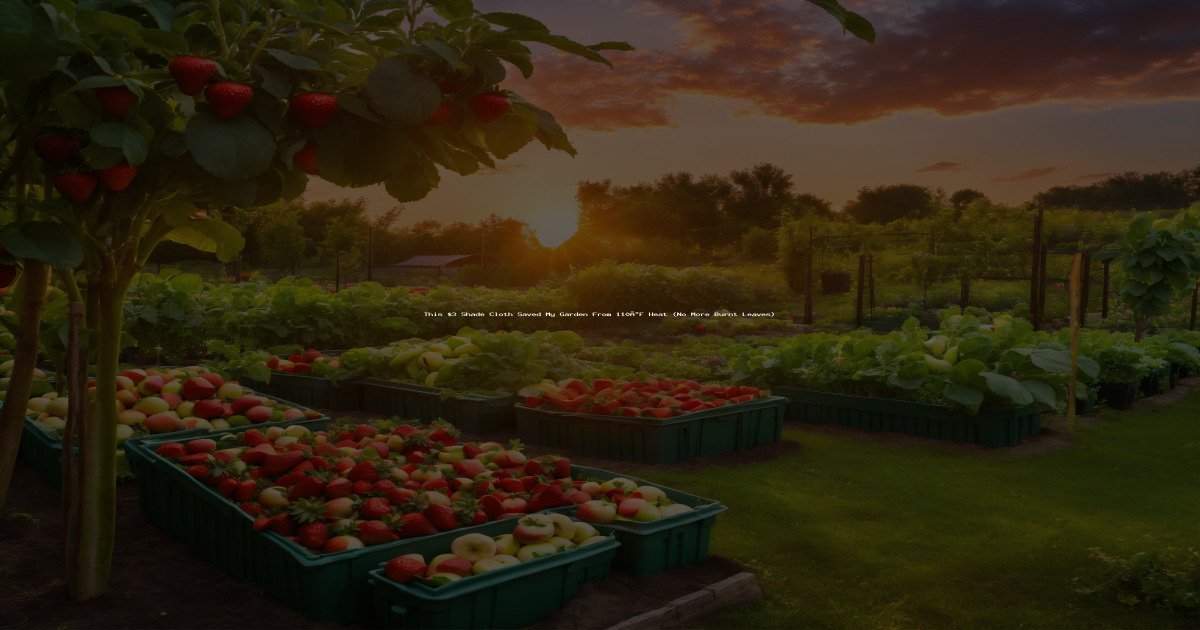
This $3 Shade Cloth Saved My Garden From 110°F Heat (No More Burnt Leaves!)
Picture this: It’s the middle of June, the sun is blazing down, and your weather app just screamed “110°F!” You rush outside, sweating before you even reach the garden gate, only to find your prize-winning tomatoes drooping like they’ve run a marathon. Your lettuce, once crisp and green, is now a sad, yellowing mess, threatening to bolt. Sound familiar? If you’re an American homeowner with a passion for gardening, you’ve likely experienced the gut-wrenching feeling of watching your hard work wither under an relentless summer sun. From the scorching deserts of Arizona to the humid infernos of Florida and even unexpected heatwaves gripping the Midwest and Northeast, extreme heat is becoming the new normal for many of us in USDA Zones 5-10.
Just last summer, I stood in my own backyard, demoralized, as a brutal heat dome settled over my region. Temperatures soared past 105°F for days on end, hitting an agonizing 110°F at its peak. My beautiful zucchini leaves were crisping at the edges, my peppers looked like they were begging for mercy, and my beloved basil was on the verge of total collapse. I felt helpless. I’d watered deeply, mulched heavily, and still, the sun was winning. My dream of a bountiful harvest was rapidly turning into a nightmare of burnt leaves and sunscalded fruit. I thought I was going to lose everything.
Then, a desperate last-minute trip to a local hardware store changed everything. Tucked away in a clearance bin, I found a small roll of shade cloth – just enough for a critical section of my raised beds – marked down to a measly $3. Skeptical but with nothing left to lose, I rigged it up over my most vulnerable plants. The difference was almost immediate. The leaves perked up, the soil stayed cooler, and the plants, though still enduring the heat, were no longer fighting for their lives. That humble $3 investment literally saved a significant portion of my garden, proving that sometimes, the simplest solutions are the most effective.
This isn’t just about saving a few leaves; it’s about protecting your investment of time, effort, and hope. It’s about ensuring that your homegrown organic vegetables make it to your dinner table, not the compost pile. As June kicks into high gear and the dog days of summer loom, now is the absolute perfect time to equip yourself with the knowledge and tools to beat the heat. Whether you’re battling the intense sun of the Southwest, the long, humid summers of the South, or the increasingly unpredictable heatwaves of the Northeast, a little shade can go a long way. Let’s dive into how this game-changing gardening secret can transform your summer garden, ensuring juicy tomatoes, crisp lettuce, and thriving plants, no matter how high the mercury climbs.
Key Takeaways for a Heat-Proof Garden:
- Shade Cloth is Your Summer MVP: A simple, inexpensive shade cloth can dramatically reduce leaf burn and plant stress in extreme heat (100°F+).
- Right Percentage Matters: Choose 30-50% shade for most vegetables; 60%+ for delicate greens or intense desert sun.
- Regional Strategies are Key: Tailor your shade and watering to your specific US climate – from humid Southern summers to arid Southwestern heat.
- DIY is Easy & Affordable: Simple PVC or even existing structures can create effective shade frames for just a few dollars.
- Beyond Shade: Combine with deep watering, heavy mulching, and heat-tolerant plant choices for ultimate protection.
- Shop Smart: Find great deals on shade cloth at Home Depot, Lowe’s, Amazon, and specialty garden suppliers across the USA.
The Ultimate Secret Weapon: Understanding Shade Cloth and How It Works
When the sun beats down relentlessly, especially during those brutal stretches of 100°F+ weather that have become increasingly common across the continental USA, your plants are essentially getting a severe sunburn. Their leaves, designed to convert sunlight into energy, become overwhelmed, leading to wilting, scorching, and ultimately, plant death. This is where shade cloth comes in – it’s not just a fancy accessory; it’s a crucial survival tool for your American garden.
Shade cloth is typically made from woven or knitted polyethylene, a durable, UV-stabilized material designed to block a specific percentage of sunlight. It comes in various densities, from a light 30% all the way up to a dense 90%. Think of it as sunscreen for your plants. Instead of completely blocking the sun, which plants need for photosynthesis, it filters out just enough of the intense rays to reduce heat stress, lower ambient temperatures around your plants by several degrees, and prevent direct sunscald on leaves and fruit. This small reduction in heat and light intensity makes a world of difference when temperatures hit those triple digits, transforming a wilting disaster zone into a thriving oasis.
The beauty of shade cloth lies in its simplicity and effectiveness. It allows air to circulate, preventing the “baking” effect that can happen under solid covers, and it’s robust enough to withstand summer storms. For just a few dollars, especially if you find a remnant or a smaller piece, you can provide immediate relief to your struggling plants, extending their productive season and ensuring a harvest even in the face of extreme conditions. As June pushes us deeper into summer, understanding how to effectively use shade cloth is no longer a luxury, but a necessity for any serious gardener.
Different Shade Percentages for Different Needs
Choosing the right shade percentage is key. For most sun-loving vegetables like tomatoes, peppers, squash, and beans, a 30-50% shade cloth is ideal. This level reduces the intensity of the sun without significantly hindering growth or fruit development. Delicate greens such as lettuce, spinach, and cilantro, which tend to bolt quickly in heat, often benefit from a slightly higher percentage, like 50-60%. In extremely arid and hot regions (like USDA Zone 9-10 in the Southwest), where daily temperatures consistently hover around 110°F, even sun-lovers might appreciate a 60% cloth during the peak afternoon hours. For seedlings or newly transplanted plants, a temporary 70% shade can provide a gentle transition to the harsh summer sun.
When to Deploy Your Shade Cloth
The best time to deploy your shade cloth is proactively, *before* a major heatwave hits. As June progresses and temperatures start consistently climbing into the high 80s and 90s Fahrenheit, it’s time to start monitoring forecasts. If 3-5 consecutive days of 95°F+ are predicted, or if your region is known for sudden spikes to 100°F and beyond, get that shade cloth up! Generally, shade cloth is most beneficial during the hottest part of the day, typically from 11 AM to 4 PM. You can leave it on for the duration of a heatwave, or even for the entire summer if you live in a perpetually hot climate. For areas with milder summers, you might only need it during specific heat events. Observing your plants is crucial: if you see wilting, yellowing, or sunscald, it’s a clear sign they need relief.
Regional Heat Battles: Tailoring Shade for Your American Garden
The continental USA is a vast and climatically diverse country, meaning a one-size-fits-all approach to gardening simply won’t work, especially when it comes to battling summer heat. A heatwave in the Pacific Northwest feels very different from a scorching day in the Arizona desert, and the impact on your garden will vary. Understanding your specific regional challenges is paramount to effectively deploying shade cloth and other heat-mitigation strategies. As June rolls on, gardeners across the nation are preparing for their unique summer conditions, and tailoring your approach is the secret to success.
From the often-humid summers of the East Coast to the dry, intense heat of the Intermountain West, every region presents its own set of hurdles. The key is not just knowing *that* you need shade, but *how much* and *when* you need it, based on your local climate. This section will break down the specific heat challenges faced by different regions and offer targeted advice on how to best protect your garden with shade cloth and complementary strategies, ensuring your plants thrive from Memorial Day planting right through to Labor Day harvest.
Northeast & Mid-Atlantic: Protecting Against Sudden Spikes
Gardeners in states like New York, Pennsylvania, Massachusetts, and Virginia often experience a mix of moderate summers with periods of intense humidity and sudden, brutal heatwaves. While 110°F days might be less common than in the Southwest, when they do hit, they can be devastating because plants aren’t accustomed to them. Here, 30-40% shade cloth is typically sufficient for most vegetables, especially during predicted heat spikes. Focus on protecting leafy greens, which can bolt quickly, and fruit-bearing plants like tomatoes and peppers to prevent sunscald. Ensure good air circulation to combat humidity-related issues alongside heat stress. Consider temporary shade structures that can be easily erected and removed as needed.
The Southern Swelter: Keeping Greens Green
The South, from Georgia and the Carolinas to Louisiana and Florida, endures long, hot, and intensely humid summers. Temperatures consistently in the 90s Fahrenheit are common, with heat indices often soaring into the triple digits. Here, shade cloth is less about occasional relief and more about sustained protection. 40-50% shade cloth is often a permanent fixture for many gardeners, especially for cool-season crops you’re trying to extend, or for delicate plants. Even heat-loving plants like okra and sweet potatoes can benefit from afternoon shade during the worst of July and August. Focus on robust, well-ventilated shade structures to mitigate both heat and humidity, which can foster fungal diseases.
Midwest’s Mighty Summers: Balancing Sun and Storm
States like Illinois, Iowa, Missouri, and Kansas experience hot, often humid summers with significant temperature swings and powerful thunderstorms. While the dryness of the Southwest isn’t usually a concern, intense sun combined with humidity can still stress plants significantly. A 30-40% shade cloth, deployed during prolonged periods of 90°F+ temperatures, will be a lifesaver for your tomatoes, peppers, and beans. It’s especially crucial to secure your shade structures well to withstand sudden summer squalls and high winds that are common in the region. Protecting young plants and leafy greens from bolting is also a primary concern here.
Pacific Northwest’s New Normal: Adapting to Heat Domes
Once known for its mild, temperate summers, the Pacific Northwest (Oregon, Washington) has recently experienced unprecedented heat domes, pushing temperatures well over 100°F, even reaching 110°F and beyond. This region’s plants and gardeners are not historically adapted to such extremes. For these unexpected, intense heatwaves, a 30-50% shade cloth becomes absolutely critical. Even traditionally shade-tolerant plants can suffer severe sunscald. Focus on immediate deployment when heat warnings are issued and ensure plants are well-watered to combat drought conditions that often accompany these heat events. Protecting berries and delicate ornamentals is also a key consideration.
Southwest’s Scorching Sun: Essential Survival Gear
In states like Arizona, Nevada, New Mexico, and parts of California, 100°F+ temperatures are a regular summer occurrence, often compounded by extreme aridity. Here, shade cloth isn’t optional; it’s fundamental for gardening success. Many gardeners utilize 50-60% shade cloth as a semi-permanent installation throughout the summer months. Even desert-adapted plants can benefit from afternoon relief. Focus on robust, well-anchored structures that can withstand intense sun and occasional high winds. Pairing shade with deep watering, heavy mulching, and strategic plant placement (e.g., south-facing walls) is crucial for survival in these truly challenging conditions. Consider using shade cloth to create microclimates for a wider variety of plants.
Finding Your Perfect Shade Solution: American Product Recommendations
Once you’ve decided that shade cloth is the missing piece in your summer gardening arsenal, the next step is finding the right product for your needs and budget. Thankfully, the American market offers a wide array of options, from budget-friendly clearance finds to more elaborate, custom-cut solutions. The accessibility of major retailers like Home Depot, Lowe’s, and Amazon US means you’re never far from a solution, whether you’re building a grand shade structure or just need a small piece to drape over a wilting basil plant. As June heats up, these stores are often stocking up on seasonal outdoor gear, making it a prime time to find what you need.
The “just $3” shade cloth I found was a lucky clearance score, but you don’t have to wait for a miracle. You can often find small rolls or pre-cut pieces for under $10-$20 that can protect a significant portion of a small garden or a few raised beds. For larger gardens, investing in a bigger roll or custom-sized panel will be more cost-effective in the long run. Remember to think about not just the cloth itself, but also how you’ll secure it. Simple clothespins and string can work for temporary solutions, but for anything more permanent, investing in specialized clips, bungee cords, or even a basic PVC frame will provide better stability and longevity.
Ready-Made Rolls and Panels
For immediate relief, many stores carry pre-packaged shade cloth in common sizes, often with grommets already installed for easy hanging. Look for brands like Coolaroo, which are widely available. These are fantastic for quickly covering a small area or draping over existing structures like pergolas or trellises. You can find 6 ft x 10 ft panels for around $20-$40, depending on the percentage and material. They’re a great entry point for those new to shade cloth or for specific problem areas in the garden. Check the garden section of your local Home Depot or Lowe’s, especially during late spring and early summer.
DIY Shade Cloth Kits: Customization is King
If you have a unique space or want a more tailored solution, consider buying shade cloth by the roll and customizing it yourself. Many online retailers and specialty garden suppliers (like Greenhouse Megastore or FarmTek, popular with American growers) sell large rolls of shade cloth in varying percentages. You can then cut it to size and use specific shade cloth clips (often sold in packs of 20-50 for $10-$20 on Amazon) to attach it to wires, ropes, or PVC frames. This offers the most flexibility for covering large areas, creating custom shapes, or building hoop houses, and can be very cost-effective per square foot. Expect to pay anywhere from $0.50 to $1.50 per square foot for bulk rolls.
Where to Buy: Your Local Home & Garden Stores
Your first stop should always be your local Home Depot or Lowe’s. They typically carry a selection of shade cloth, often in pre-cut sizes or small rolls, during the spring and summer months. These stores are great for picking up not just the cloth, but also PVC pipes, rebar, zip ties, and other hardware you might need for a DIY structure. Don’t forget smaller, independent garden centers; they might have specialty brands or be able to order custom sizes for you. Prices will be competitive, and you can get advice from local experts.
Online Giants: Amazon and Specialty Retailers
For the widest selection, Amazon US is an unparalleled resource. You can find every percentage, size, and type of shade cloth imaginable, often with free shipping for Prime members. Search for “shade cloth for plants,” “greenhouse shade cloth,” or “sun block fabric.” Beyond Amazon, specialized online retailers like Growers Supply or Charley’s Greenhouse & Garden offer high-quality, long-lasting shade cloth designed for serious gardeners and commercial operations. While potentially a slightly higher upfront cost, these products are often built to withstand multiple seasons of harsh American summers, making them a worthwhile investment.
Beyond the Cloth: Proven Strategies for a Heat-Proof Garden
While shade cloth is an absolute game-changer, especially when temperatures soar past the 100°F mark, it’s just one piece of the puzzle for a truly resilient summer garden. A comprehensive heat-protection strategy involves several interconnected practices that work synergistically to keep your plants happy and productive throughout the long, hot American summer. As June ushers in the true heat, it’s time to double down on these essential techniques to ensure your garden doesn’t just survive, but thrives, leading to a bountiful harvest from your hard work.
Think of it as creating a complete ecosystem of heat defense. Deep watering keeps roots hydrated, mulch insulates the soil, and strategic plant choices ensure you’re working with, not against, your climate. Combining these methods with your newly acquired shade cloth expertise will transform your gardening approach, making you a true heat-battling champion. These are time-tested techniques that American gardeners across various USDA zones have relied on for generations, adapted for the increasingly extreme conditions we face today.
Smart Watering: The Foundation of Heat Survival
When the mercury hits 110°F, your plants need water more than ever, but *how* you water is just as important as *how much*. Deep watering is crucial. Instead of frequent, shallow sprinkles, aim to water deeply and less often. This encourages roots to grow deeper into the soil, making them more resilient to surface evaporation and heat. Water early in the morning, before the sun gets intense, to minimize evaporation and allow plants to absorb moisture before the daily stress begins. Aim for 1-2 inches of water per week, adjusting for rainfall and extreme heat. A rain gauge can help you measure this. For container plants, they may need watering twice a day during peak heat.
Mulch, Mulch, Mulch: Your Garden’s Blanket
A thick layer of organic mulch is a non-negotiable for any summer garden, especially in hot climates. Apply 2-4 inches of wood chips, straw, shredded leaves, or even pine bark around your plants. Mulch acts as an insulating blanket, keeping soil temperatures cooler by reflecting sunlight and reducing evaporation by up to 50%. This means your plants stay hydrated longer, and their roots don’t get “cooked.” It also suppresses weeds, which compete for precious water and nutrients. In regions with intense sun like the Southwest, a lighter-colored mulch can reflect more heat, while in more temperate zones, any organic mulch will provide significant benefits. It’s an easy, inexpensive way to save gallons of water and protect delicate root systems.
Strategic Plant Placement and Companion Planting
Before the season fully ramps up in June, consider where you’re placing your plants. Taller plants can naturally shade shorter, more delicate ones. For example, planting corn or sunflowers on the south side of a row of lettuce can provide natural afternoon shade. Utilize existing structures like fences or pergolas for partial shade. When choosing varieties, opt for heat-tolerant options from reputable American seed companies like Burpee, Baker Creek Heirloom Seeds, or Park Seed. Look for varieties specifically bred for your region’s heat or those known to perform well in hotter climates (e.g., ‘Heatwave’ tomatoes, ‘Black Beauty’ eggplant). Consider planting a “sacrificial” plant to draw pests away from your main crops, or companion plants that provide mutual benefits, such as marigolds to deter nematodes.
Container Gardens in the Heat: Special Care
Container plants are particularly vulnerable to heat because their soil dries out much faster and the pots themselves can heat up significantly. Use light-colored pots to reflect heat, or consider “pot-in-pot” systems where a smaller pot is placed inside a larger, insulated one. Move containers to shadier spots during the hottest part of the day, or place them under your shade cloth setup. Ensure excellent drainage and consider using self-watering containers. Fertilize judiciously, as heat stress can make plants more susceptible to nutrient burn. Regular monitoring and often twice-daily watering are essential for container plants in a scorching summer.
Building Your Shade Sanctuary: Easy DIY Setups for Every Homeowner
You’ve got your shade cloth, you understand its magic, and you’re ready to protect your garden. Now, how do you actually get it up? Don’t be intimidated! Building a functional shade structure doesn’t require a construction degree or a huge budget. Many effective setups can be built with common materials found at any American hardware store like Home Depot or Lowe’s, often for less than $50. The goal is to create a framework that holds your shade cloth above your plants, allowing for good air circulation while providing that crucial sun protection. As we move deeper into June and the summer heat truly settles in, having a quick and easy DIY shade solution ready to go can save your garden from disaster.
From simple, temporary fixes for a sudden heatwave to more robust, semi-permanent structures for season-long protection, there’s a DIY option for every gardener and every yard size. The key is flexibility and stability. You want something that can be easily adjusted or removed, but also something that won’t blow away in a typical summer thunderstorm. Let’s explore some popular and incredibly effective ways American homeowners can create their own shade sanctuaries.
The Simple PVC Frame: Affordable & Effective
One of the most popular and budget-friendly DIY shade structures uses PVC pipes. You can purchase Schedule 40 PVC pipe (1/2-inch or 3/4-inch diameter works well) in 10-foot lengths for just a few dollars each. Connect them using PVC elbows and T-connectors to create a simple rectangular or square frame that sits over your raised beds or rows. For a 4 ft x 8 ft raised bed, you might need four 4-foot pieces, four 8-foot pieces, four corner elbows, and two T-connectors. Secure the legs of the frame into the ground using rebar stakes driven into the soil, or simply let it rest on the edges of a raised bed. Attach your shade cloth to the frame using shade cloth clips, zip ties, or even bungee cords. This setup is lightweight, easy to assemble, and can be disassembled for storage in the fall.
Repurposing Existing Structures: Smart & Sustainable
Look around your yard for existing elements you can leverage. A pergola, an arbor, a sturdy fence, or even the side of your house can serve as anchor points for your shade cloth. You can string wires or ropes between posts, attach eye hooks to a fence, or use clothespins to hang the cloth. For instance, draping shade cloth from the edge of a porch or patio roof down to the ground can create a shaded microclimate for delicate container plants. This method is often the quickest and cheapest, as it requires minimal additional materials. Just ensure the existing structure can handle the slight weight and potential wind resistance of the cloth.
Quick Fixes for Unexpected Heatwaves
Sometimes, a heatwave sneaks up on you, and you need immediate relief. For individual plants or small clusters, a simple tomato cage draped with a piece of shade cloth works wonders. You can also use garden stakes (bamboo, metal, or even sturdy tree branches) pushed into the ground around a plant, then drape the cloth over them, securing with clothespins or twine. An old clothesline can be repurposed: string it between two sturdy posts or trees, and then hang your shade cloth over it, allowing it to sag slightly to create a shaded tunnel. These temporary solutions are perfect for protecting a few struggling plants during a short, intense heat spike.
Anchoring Your Shade: Keeping it Secure
No matter what type of structure you build, proper anchoring is crucial, especially in regions prone to summer thunderstorms or high winds. For PVC frames, driving rebar stakes into the ground and sliding the PVC legs over them provides excellent stability. For cloth draped over wires or ropes, ensure the tension is tight and the anchor points (fence posts, trees) are secure. Use strong bungee cords or specialized shade cloth clips that grip the fabric without tearing it. For larger, more permanent installations, consider burying the edges of the cloth or weighing them down with rocks or bricks to prevent wind from lifting it and exposing your precious plants.
Protecting Your Prized Plants: Specific Crops & Their Shade Needs
Understanding which plants benefit most from shade cloth, and when, is key to maximizing your harvest and minimizing plant stress during the scorching American summer. Not all plants react to intense heat in the same way, and some “sun-lovers” surprisingly still need a break when temperatures climb into the triple digits. As June progresses and temperatures soar, knowing your plants’ specific needs will help you deploy your $3 shade cloth strategically, ensuring your garden remains productive and vibrant.
From the delicate leafy greens that bolt at the first sign of heat to the robust tomatoes that can still suffer sunscald, every plant has a threshold. This section will guide you through the specific requirements of common American garden crops, helping you make informed decisions about when and how to provide shade relief. The goal isn’t to block all sun, but to temper its intensity during the most brutal hours, allowing your plants to continue their vital processes without succumbing to heat exhaustion.
Sun-Loving Vegetables That Still Need a Break
Many of our favorite summer vegetables, like tomatoes, peppers, eggplants, and squash, are often labeled “full sun” plants, meaning they need 6-8 hours of direct sunlight. However, “full sun” in a temperate climate is very different from “full sun” when the thermometer hits 105°F. In extreme heat, these plants can suffer from:
- Sunscald: White or yellow leathery patches on fruit, making them inedible.
- Blossom Drop: Flowers fall off before setting fruit, leading to reduced yields.
- Wilting: Even with adequate water, plants can’t transpire fast enough to cool themselves.
For these crops, a 30-40% shade cloth during the hottest part of the day (11 AM – 4 PM) is usually sufficient. It reduces the intensity without sacrificing necessary light for fruit development. Ensure good air circulation around these plants to prevent fungal issues, especially in humid regions.
Cool-Season Crops: Extending Their Season
Cool-season vegetables like lettuce, spinach, kale, cilantro, and radishes are notorious for bolting (going to seed) and turning bitter as soon as temperatures rise consistently above 75-80°F. If you want to extend your harvest of these greens well into June and even July, shade cloth is your best friend. A 50-60% shade cloth can significantly lower the ambient temperature around these plants, delaying bolting and keeping leaves tender and palatable. This allows you to enjoy fresh salads long after most unshaded cool-season crops have called it quits. Consider planting heat-tolerant varieties of lettuce or spinach from American seed companies for even better results under shade.
Delicate Herbs and Flowers: Beauty Under Cover
Many popular herbs, such as basil, mint, and cilantro, can quickly wilt, scorch, or bolt in intense summer sun. Basil, in particular, thrives with some afternoon shade in hot climates. A 30-50% shade cloth can keep these herbs lush and flavorful. Similarly, many flowering annuals and perennials, while needing