body { font-family: ‘Segoe UI’, Tahoma, Geneva, Verdana, sans-serif; line-height: 1.7; color: #333; margin: 0 auto; max-width: 900px; padding: 20px; background-color: #f9f9f9; }
h1, h2, h3 { color: #2a6a4a; margin-top: 1.5em; margin-bottom: 0.8em; }
h1 { font-size: 2.5em; text-align: center; color: #1a4a3a; }
h2 { font-size: 1.8em; border-bottom: 2px solid #e0e0e0; padding-bottom: 0.3em; }
h3 { font-size: 1.4em; color: #3a8a5a; }
p { margin-bottom: 1em; }
ul, ol { margin-bottom: 1em; padding-left: 25px; }
li { margin-bottom: 0.5em; }
strong { color: #000; }
em { font-style: italic; color: #555; }
table { width: 100%; border-collapse: collapse; margin-top: 1.5em; margin-bottom: 1.5em; }
th, td { border: 1px solid #ddd; padding: 10px; text-align: left; }
th { background-color: #e6f2ed; color: #2a6a4a; font-weight: bold; }
tr:nth-child(even) { background-color: #f5f5f5; }
.key-takeaways { background-color: #e6f2ed; border-left: 5px solid #2a6a4a; padding: 20px; margin: 2em 0; border-radius: 5px; }
.key-takeaways h2 { color: #1a4a3a; margin-top: 0; border-bottom: none; padding-bottom: 0; }
.button-container { text-align: center; margin: 2em 0; }
.button { display: inline-block; background-color: #2a6a4a; color: white; padding: 15px 30px; text-decoration: none; border-radius: 5px; font-weight: bold; font-size: 1.1em; transition: background-color 0.3s ease; }
.button:hover { background-color: #3a8a5a; }
a { color: #2a6a4a; text-decoration: none; }
a:hover { text-decoration: underline; }
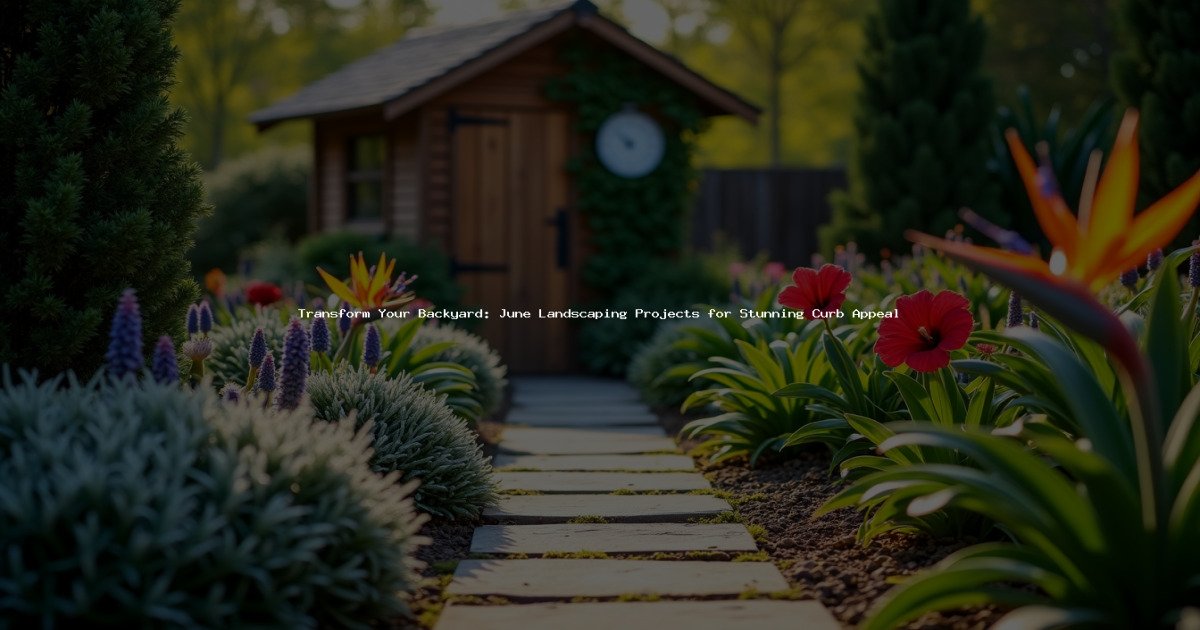
Transform Your Backyard: June Landscaping Projects for Stunning Curb Appeal
Key Takeaways for Your June Landscape Transformation:
- Embrace Summer Essentials: June is prime time for strategic watering, fertilizing, and pruning to ensure vibrant growth.
- Know Your Region: Tailor your projects to specific climates, from the humid South to the arid Southwest, for optimal results.
- Smart Product Choices: Leverage American brands from Home Depot, Lowe’s, and Amazon US for reliable tools, plants, and amendments.
- Boost Curb Appeal Instantly: Focus on container gardening, defined garden beds, and well-maintained pathways to elevate your home’s exterior.
- Proactive Pest & Disease Management: Implement organic and IPM strategies to keep your plants healthy and thriving.
- Plan for the Future: Utilize June’s growth to visualize and plan for long-term beauty, incorporating native and low-maintenance options.
Ah, June! The mercury is rising, school is out, and the sweet scent of honeysuckle drifts on the breeze. For many American homeowners, this is the month when our backyards truly burst into life, beckoning us outdoors to enjoy long evenings and sunny weekends. But June isn’t just for lounging; it’s a critical window for landscaping projects that can dramatically enhance your home’s curb appeal, making it the envy of the neighborhood and a true reflection of your personal style.
Whether you’re nestled in the humid embrace of the Carolinas, basking in the endless sunshine of Southern California, or enjoying the mild, verdant beauty of the Pacific Northwest, June presents unique opportunities—and challenges—for your garden. As the summer officially kicks off, often right after Memorial Day planting, plants are actively growing, and the soil is warm enough to establish new additions quickly. However, the increasing heat also demands smart watering strategies and vigilant pest management.
Across the vast and varied landscapes of the continental USA, from USDA Hardiness Zone 3 in the northern reaches of Minnesota to Zone 10b in the subtropical tip of Florida, understanding your local climate is paramount. A vibrant display of petunias thriving in a New England window box might wilt under the intense Texas sun, while a drought-tolerant agave flourishing in Arizona would likely drown in the consistent moisture of Oregon. This guide is crafted to help you navigate these regional differences, offering practical advice, American product recommendations, and expert tips to ensure your June landscaping efforts yield stunning, sustainable results.
Imagine pulling into your driveway after a long day, greeted by a symphony of colorful blooms, lush greenery, and inviting pathways. Picture your outdoor living spaces transformed into serene retreats for family gatherings or lively hubs for summer entertaining. This isn’t just a pipe dream; with a bit of planning and the right techniques, your backyard can become that vibrant oasis. From simple updates that offer instant gratification to more involved projects that lay the groundwork for long-term beauty, we’ll cover everything you need to know to make your June landscaping dreams a reality. Get ready to grab your gardening gloves, because it’s time to turn your backyard into a masterpiece!
The Ultimate June Refresh: Essential Summer Landscaping Tasks
June marks the true arrival of summer across much of the United States, bringing with it a flurry of growth and the need for specific care to keep your landscape looking its best. This isn’t the time for major overhauls (unless you’re in a cooler climate), but rather for refining, nurturing, and protecting the investments you’ve already made. Think of June as your landscape’s maintenance month, where consistent effort pays off in spectacular dividends, ensuring your plants thrive through the peak summer heat.
Summer Pruning Perfection
As flowers fade and shrubs get leggy, strategic pruning becomes vital. Deadheading spent blooms on annuals and perennials like petunias, marigolds, coneflowers, and daylilies encourages new flower production, leading to a continuous show of color well into fall. For shrubs such as hydrangeas (especially those that bloom on new wood), roses, and spirea, light shaping and removal of crossing or damaged branches can improve air circulation and plant health. Be cautious with heavy pruning in June, particularly for spring-flowering shrubs that have already set their buds for next year; you risk sacrificing next spring’s blooms. Always use clean, sharp bypass pruners, like a reliable pair from Felco (often found at Lowe’s or online at Amazon US), to make clean cuts and prevent disease. For larger branches, a good pair of loppers will be your best friend. Remember, a little snip here and there can make a huge difference in the overall appearance and vigor of your plants. This attention to detail is a hallmark of truly stunning curb appeal.
Watering Wisdom for Warmer Weather
With temperatures soaring into the 80s and 90s Fahrenheit in many regions, consistent and efficient watering is paramount. The general rule of thumb is to water deeply and infrequently, encouraging roots to grow deeper into the soil, making plants more resilient to drought. Aim for about 1 inch of water per week, either from rainfall or irrigation, especially for new plantings. Early morning is the best time to water, between 6:00 AM and 10:00 AM, allowing foliage to dry before nightfall and minimizing fungal diseases. Overhead sprinklers are fine for lawns, but drip irrigation or soaker hoses are more efficient for garden beds, delivering water directly to the root zone and reducing evaporation. Consider investing in a smart sprinkler controller, like those from Rachio or Orbit (available at Home Depot), which can adjust watering schedules based on local weather forecasts. For container plants, which dry out much faster, daily watering might be necessary, sometimes twice a day during heat waves. Feel the soil; if it’s dry an inch or two down, it’s time to water. Neglecting this crucial task in June can quickly lead to stressed, wilting plants, undermining all your hard work.
Fertilizing for Fabulous Blooms
Plants are heavy feeders during their active growth phase, and June is an excellent time to provide a boost, especially for annuals, flowering perennials, and container plants. A balanced, slow-release granular fertilizer, like Miracle-Gro Shake ‘n Feed or Espoma Plant-tone (widely available at garden centers and Amazon US), will provide a steady supply of nutrients over several weeks, preventing nutrient burn and promoting sustained growth. For a quick pick-me-up or for thirsty container plants, a liquid feed like fish emulsion or a diluted all-purpose plant food can be applied every 2-4 weeks. Always follow package directions carefully, as over-fertilizing can be detrimental. Remember that established trees and shrubs often don’t need additional fertilizer if they are healthy and the soil is rich in organic matter. Focus your efforts on plants that are actively producing flowers or fruits, ensuring they have the energy to continue their spectacular show throughout the summer months. A well-fed garden is a vibrant garden, and a vibrant garden is key to incredible curb appeal.
Regional Rhapsody: Tailoring Your June Landscape Across America
The vastness of the United States means that “June landscaping” looks dramatically different from coast to coast. What thrives in Seattle might struggle in Phoenix, and a plant perfectly suited for Miami could perish in Minneapolis. Understanding your specific climate and USDA Hardiness Zone (find yours at https://ecorganicas.org/when-to-plant-garlic/) is the first step to successful June gardening. Let’s break down how to optimize your efforts based on America’s diverse regions.
Northeast & Midwest: Battling Humidity and Boosting Blooms
For gardeners in states like New York, Pennsylvania, Ohio, Illinois, and Michigan (USDA Zones 4-7), June means the full arrival of warm, often humid weather. While the risk of frost is long gone, the challenge shifts to managing moisture and promoting continuous bloom. Hydrangeas, hostas, and daylilies are shining stars here. Focus on deadheading spent spring bulbs and early perennials to encourage rebloom. Humidity can bring fungal issues, so ensure good air circulation around plants and water at the base in the morning. Consider planting heat-tolerant annuals like impatiens (shade) and petunias (sun) for continuous color. Mulching is crucial to retain soil moisture during dry spells and suppress weeds. Keep an eye out for Japanese beetles, which emerge in June and can quickly defoliate roses and other plants; organic pest control methods are often effective. This is also a great time to refresh container plantings with vibrant mixes that can withstand the summer heat.
The Sunny South: Heat-Tolerant Havens
From Florida to Texas, Louisiana to Georgia (USDA Zones 7-10), June is characterized by intense heat and often high humidity. Plant choices are critical here. Crape myrtles, salvias, lantana, and hibiscus are superstars, thriving in conditions that would wilt many northern plants. Watering strategies are paramount; deep, infrequent watering is essential to encourage strong root systems. Consider expanding your palette of drought-tolerant plants, even if you don’t live in an arid zone, as summer dry spells are common. Mulch heavily to conserve precious soil moisture and keep soil temperatures down. Be vigilant for pests that multiply rapidly in warm, moist conditions, such as spider mites and scale. June is also a prime time to install tropical annuals for a vibrant, exotic feel that will last until fall. Remember to protect new plantings from the harshest afternoon sun if possible, especially during the first few weeks of establishment.
Pacific Northwest: Lush Greens in Mild Summers
In states like Washington and Oregon (USDA Zones 6-9), June usually brings milder temperatures and less intense sun compared to other regions. This climate is ideal for rhododendrons, azaleas, ferns, and hostas, which appreciate the temperate conditions. While spring might still be lingering, June is when the PNW garden truly comes alive. Watering is still important, but often less frequent than in hotter climates, thanks to cooler nights and occasional drizzles. Focus on maintaining lush foliage and vibrant blooms. Deadhead spent flowers to encourage rebloom and tidy up garden beds. Slugs and snails can be a persistent problem here, so organic slug baits or hand-picking can be effective. June is a wonderful month for planting cool-season annuals and vegetables, as well as establishing new perennials and shrubs that will benefit from a long, mild growing season. Leverage the natural beauty of evergreens and incorporate native plants for a truly harmonious landscape.
Southwest: Desert Oasis Design
Arizona, New Mexico, Nevada, and parts of California and Texas (USDA Zones 7-10) face the most extreme heat and drought conditions in June. Xeriscaping, or water-wise landscaping, is not just a trend here, it’s a necessity. Cacti, succulents, agave, and native desert shrubs like brittlebush and palo verde are ideal. Watering should be deep but very infrequent, allowing the soil to dry out completely between waterings. Early morning watering is crucial to minimize evaporation. Focus on improving soil with organic matter to help retain what little moisture is available. Drip irrigation systems are highly recommended for efficiency. Mulching with gravel or inorganic materials is common to keep soil cool and prevent evaporation. Ensure any new plantings are highly drought-tolerant and established before the peak of summer. Shade structures, like pergolas or shade sails, can protect sensitive plants and create comfortable outdoor living spaces. This is also a good time to check your irrigation system for leaks and efficiency. For more on water-wise gardening, check out https://ecorganicas.com/how-to-grow-a-tea-garden-from-leaf-to-mug/.
Smart Buys: Top American Products for Your June Projects
Equipping yourself with the right tools and materials is crucial for any successful landscaping project. Thankfully, American retailers like Home Depot, Lowe’s, and Amazon US offer a vast array of high-quality products that can help you achieve your June gardening goals. From durable tools to vibrant plants and soil amendments, making smart purchasing decisions can save you time, money, and effort in the long run. Here are some top recommendations, keeping American units and preferences in mind.
Tools of the Trade: Must-Have Gear
- Ergonomic Bypass Pruners: A good pair of pruners is indispensable for deadheading, shaping, and light trimming. Brands like Felco (often found at Lowe’s and specialty garden stores, also on Amazon US) are a favorite for their durability and clean cuts. Expect to pay around $50-$70.
- Expandable Garden Hose: For convenient watering, a lightweight, kink-free hose like the Flexzilla Garden Hose (available at Home Depot, Lowe’s, and Amazon US) in lengths of 50 or 100 feet is a game-changer. Prices range from $30-$70.
- Hand Trowel & Cultivator Set: For planting annuals or weeding, a sturdy set from brands like Fiskars or Corona (at most hardware stores and Amazon US) with comfortable handles makes a big difference. Look for stainless steel options for longevity, typically $20-$40 for a set.
- Wheelbarrow or Garden Cart: Moving mulch, soil, or plants is much easier with a quality wheelbarrow (e.g., Jackson M6T22 at Home Depot/Lowe’s, around $100-$150) or a garden cart (e.g., Gorilla Carts on Amazon US, $80-$200).
- Adjustable Sprinkler: For lawns or larger beds, an oscillating or rotating sprinkler from Orbit or Melnor (Home Depot, Lowe’s, Amazon US) provides even coverage without constant monitoring. Budget around $20-$40.
Plant Picks: Nursery Favorites
June is perfect for adding splashes of color and filling in gaps. Visit your local Home Depot, Lowe’s Garden Center, or independent nursery for robust plants that are ready to thrive.
- Vibrant Annuals: For continuous summer color, load up on Petunias, Marigolds, Vinca, Impatiens (for shade), and Lantana. These are typically sold in 4-inch pots or flats and are very affordable, ranging from $3-$10 per plant or $15-$30 for a flat.
- Hardy Perennials: For long-term beauty, consider adding Coneflowers (Echinacea), Daylilies (Hemerocallis), Black-Eyed Susans (Rudbeckia), or Hostas (for shade). These often come in 1-gallon or 2-gallon containers and cost $15-$30 each, offering years of enjoyment.
- Flowering Shrubs: For structural elements and larger blooms, look for Hydrangeas (especially ‘Endless Summer’ varieties), Knock Out Roses, or Spirea. Available in various sizes, from 1-gallon to 5-gallon, with prices from $25-$70.
- Edibles: June is also a great time to plant warm-season vegetables like tomatoes, peppers, and herbs (basil, rosemary, mint) from starts. Look for healthy, compact plants at your local nursery.
Soil & Amendments: Building a Strong Foundation
Healthy soil is the bedrock of a beautiful garden.
- Potting Mix: For containers and raised beds, a high-quality potting mix like Miracle-Gro Potting Mix or FoxFarm Ocean Forest Potting Soil (available at Home Depot, Lowe’s, Amazon US) is essential. A 1.5 cubic foot bag typically costs $10-$25.
- Compost: Improve soil structure and fertility by mixing in organic compost. Brands like Bumper Crop or bags of local compost are excellent. You can find these at garden centers in 1 cubic foot bags for $5-$10, or in bulk from local landscape suppliers.
- Mulch: Retain moisture, suppress weeds, and regulate soil temperature with a good layer of mulch. Pine bark nuggets, cedar mulch, or shredded hardwood mulch (available in 2-3 cubic foot bags at Home Depot, Lowe’s for $4-$8 per bag) are popular choices. For Southwest regions, consider decorative gravel or rock mulch.
- Slow-Release Fertilizer: As mentioned, a balanced slow-release granular fertilizer like Espoma Plant-tone or Osmocote Smart-Release Plant Food (Amazon US, garden centers) is perfect for sustained nutrient delivery. A 4-pound bag usually runs $15-$25.
By carefully selecting these American-made or widely available products, you’ll be well-equipped to tackle your June landscaping projects with confidence and achieve stunning results for your home’s curb appeal.
Elevate Your Entrance: Creating Stunning Curb Appeal This June
Your home’s entrance is the first impression, and June is the perfect month to make it unforgettable. With plants in full growth and the weather inviting outdoor work, you can transform a drab front yard into a vibrant, welcoming space. Focusing on key areas like containers, garden beds, and pathways can provide an immediate and dramatic boost to your home’s curb appeal, making it a joy to come home to and a delight for visitors. These projects are often manageable for a weekend warrior and yield impressive visual returns.
The Power of Pots and Planters
Container gardening is perhaps the quickest way to add instant color and sophistication to your front entry, porch, or patio. In June, annuals are thriving, making them perfect for “thriller, filler, and spiller” combinations. A “thriller” is a tall, dramatic plant (like a canna or ornamental grass), a “filler” adds volume (petunias, impatiens), and a “spiller” cascades over the edge (sweet potato vine, creeping jenny). Choose planters that complement your home’s architectural style—terracotta for a rustic look, glazed ceramic for a modern touch, or classic urns for elegance. Ensure your pots have drainage holes to prevent waterlogging, especially during heavy summer rains. Place them strategically: flanking your front door, lining a walkway, or grouping them in varying sizes for visual interest. Remember, container plants dry out much faster than those in the ground, so plan for daily watering, possibly twice during scorching 90-degree Fahrenheit days. For more creative container ideas, check out https://ecorganicas.com/how-to-grow-a-tea-garden-from-leaf-to-mug/.
Edging Excellence and Mulch Magic
Crisp, defined garden beds are a hallmark of a well-maintained landscape. June is an ideal time to install or refresh edging and apply a fresh layer of mulch. Edging, whether it’s made of plastic, metal, brick, or stone, creates a clean line between your lawn and garden beds, preventing grass from creeping into your plantings and giving your landscape a polished, professional look. You can find various edging materials at Home Depot or Lowe’s, typically sold in 10-foot sections or by the piece. Once your beds are edged, apply a 2-3 inch layer of organic mulch (like shredded hardwood, cedar, or pine bark) to all exposed soil. Mulch offers numerous benefits: it suppresses weeds, retains soil moisture (reducing your watering frequency by up to 50%), moderates soil temperature, and slowly adds organic matter as it decomposes. A fresh layer of dark mulch provides a beautiful contrast to green foliage and colorful blooms, making your plants pop and instantly elevating the perceived value of your property. Avoid piling mulch against tree trunks or plant stems, as this can lead to rot and pest issues.
Path to Perfection: Walkway Wonders
Your walkways and pathways are not just functional; they guide visitors and contribute significantly to your home’s aesthetic. In June, take the time to clean, repair, and enhance these important features. Power wash concrete or paver pathways to remove dirt, grime, and mildew that accumulated over spring. Repair any cracked pavers or uneven stepping stones for safety and appearance. Consider adding low-voltage landscape lighting along pathways, which not only enhances safety at night but also creates a warm, inviting glow, highlighting your garden’s features. Solar-powered pathway lights (available on Amazon US for $30-$80 for a pack of 6-8) are an easy, no-wiring solution. For a softer look, you can plant low-growing, fragrant groundcovers like creeping thyme or Irish moss between stepping stones, or line pathways with compact, colorful annuals. A well-maintained and thoughtfully illuminated pathway truly welcomes guests and adds a touch of elegance to your June landscape.
Proven Strategies for Pest & Disease Prevention
As your garden flourishes in June, so too do the opportunities for pests and diseases to make an unwelcome appearance. Warm temperatures and increased humidity, especially in regions like the South and Midwest, create ideal breeding grounds for various garden invaders. Proactive prevention is always easier and more effective than reactive treatment. By implementing smart, sustainable strategies, you can maintain a healthy, vibrant landscape without resorting to harsh chemicals. This approach not only protects your plants but also the beneficial insects, pollinators, and overall ecosystem of your backyard.
Organic Defenses: Nature’s Solutions
Embracing organic methods is a fantastic way to keep your June garden healthy. Start with strong plants; healthy plants are naturally more resistant to pests and diseases. Ensure they receive adequate water, nutrients, and sunlight. Next, encourage beneficial insects like ladybugs, lacewings, and parasitic wasps, which prey on common pests like aphids and spider mites. You can attract them by planting a diverse array of flowers, especially those with small blooms like dill, cilantro, or sweet alyssum. If you spot a pest problem, try the simplest solutions first: a strong spray of water can dislodge aphids, or hand-pick larger pests like Japanese beetles (collect them in a bucket of soapy water). For more persistent issues, organic sprays like Neem oil (available on Amazon US, Home Depot) or insecticidal soap (often found at Lowe’s) can be very effective against soft-bodied insects without harming beneficials. Always read labels and apply during cooler parts of the day to avoid leaf burn, especially when temperatures are in the high 80s Fahrenheit. Rotate your crops if you have a vegetable garden to break pest and disease cycles.
Integrated Pest Management (IPM) Principles
Integrated Pest Management (IPM) is a holistic, common-sense approach that combines various pest control tactics to minimize risks to people, property, and the environment. It’s about smart decision-making, not just spraying. Here’s how to apply IPM in your June landscape:
- Identify the Problem: Don’t just assume. Accurately identify the pest or disease. Is it an aphid or a ladybug larva? Is that yellowing from lack of water or a fungal issue? University extension offices (e.g., https://ecorganicas.org/how-deep-to-plant-potatoes/) are great resources for identification.
- Monitor Regularly: Spend time in your garden daily or weekly, inspecting plants for early signs of trouble. Look under leaves, check new growth. Early detection is key.
- Set Action Thresholds: Decide how much damage you can tolerate. A few aphids are usually not a problem; a full infestation is. Not every pest requires immediate action.
- Cultural Controls: These are your best defense. Choose pest-resistant plant varieties. Ensure proper spacing for air circulation. Maintain good soil health. Water correctly. Remove diseased plant material promptly.
- Biological Controls: Utilize beneficial insects. You can even purchase them from reputable suppliers if natural populations aren’t sufficient.
- Physical/Mechanical Controls: Hand-picking, trapping, using row covers for vegetables, or erecting physical barriers.
- Chemical Controls (Last Resort): If all else fails and the problem is severe, choose the least toxic option first. Organic pesticides are preferred. Apply them judicious