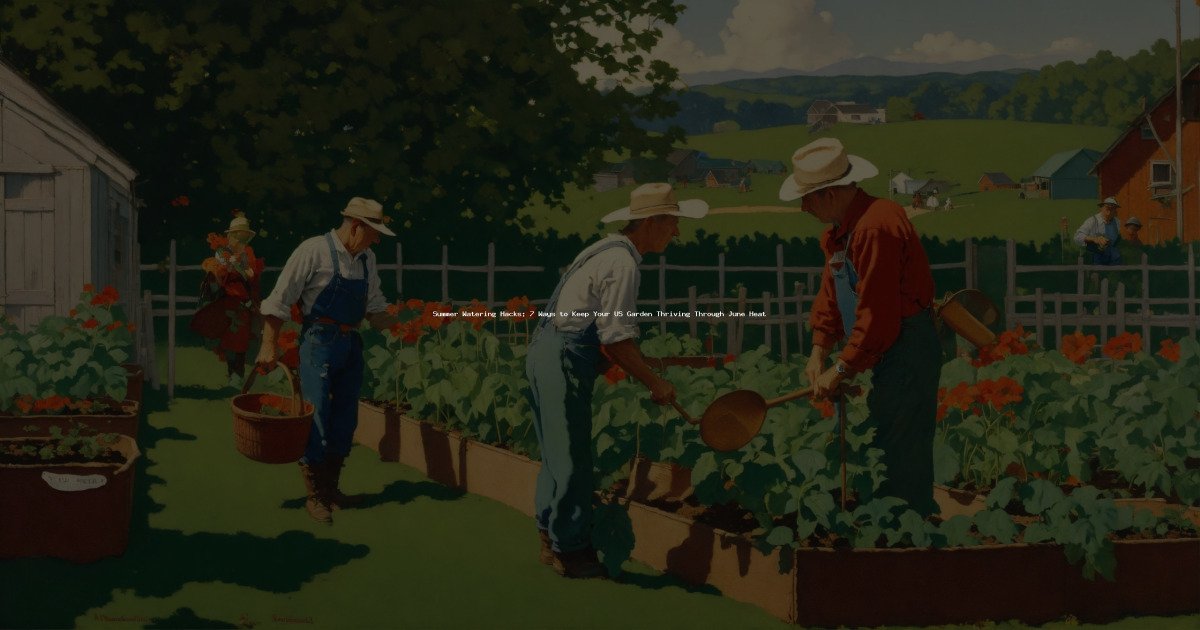
As the mercury climbs and June kicks off the official start of summer across the United States, many American gardeners find themselves grappling with a familiar foe: the relentless heat. That vibrant green oasis you meticulously nurtured since Memorial Day planting can quickly turn into a parched, wilting landscape without the right strategy. Whether you’re in the humid embrace of Florida, the sun-baked expanses of Arizona, the fertile plains of the Midwest, the verdant valleys of the Pacific Northwest, or the bustling backyards of the Northeast, June’s warmth brings unique challenges to keeping your plants happy and hydrated.
Picture this: you step outside, coffee in hand, ready to admire your flourishing tomatoes or blooming petunias, only to be met with drooping leaves and thirsty soil. It’s a disheartening sight, isn’t it? The good news is, you’re not alone in this seasonal struggle. From USDA Zone 3 all the way down to Zone 10, gardeners nationwide face similar dilemmas when the thermometer hits the 80s, 90s, or even triple digits. The secret to a thriving summer garden isn’t just about how much you water, but how smart you water.
June is a pivotal month. The longer daylight hours and rising temperatures mean plants are actively growing and producing, demanding more moisture than ever. Yet, evaporation rates skyrocket, making every drop count. This isn’t just about keeping plants alive; it’s about helping them flourish, produce bountiful harvests, and display their full beauty without succumbing to stress. Neglecting proper watering now can lead to stunted growth, reduced yields, and an increased susceptibility to pests and diseases – nobody wants that after all the hard work put in during spring!
But fear not, fellow American green thumb! We’ve gathered the ultimate arsenal of summer watering hacks, specifically tailored for the diverse climates and unique needs of gardens across the continental USA. We’re talking about practical, effective strategies that will not only conserve precious water but also ensure your hydrangeas stay perky, your corn reaches for the sky, and your petunias continue their dazzling display, even when the June sun is beating down with full force. Get ready to transform your watering routine from a chore into a highly effective, garden-saving art. Let’s dive into these 7 game-changing ways to keep your US garden thriving through the heat!
Key Takeaways for a Thriving June Garden:
- Deep & Infrequent: Water less often but deeply to encourage strong root growth.
- Mulch Magic: Apply a 2-4 inch layer of organic mulch to retain moisture and regulate soil temperature.
- Drip Systems are Your Friend: Invest in drip irrigation or soaker hoses for efficient, targeted watering.
- Morning Rituals: Always water in the early morning to minimize evaporation and prevent fungal diseases.
- Rainwater Harvesting: Set up a rain barrel to collect free, chlorine-free water.
- Container Care: Group pots, use self-watering planters, and consider terracotta “ollas.”
- Know Your Soil: Use a moisture meter or the “finger test” to water only when truly needed.
1. The Ultimate Guide to Deep and Infrequent Watering
When the summer sun beats down, it’s tempting to grab the hose and give your plants a quick sprinkle every day. However, this is one of the biggest mistakes a gardener can make, especially in June when consistent heat can quickly dry out the topsoil. The truth is, frequent, shallow watering encourages shallow root systems. These roots are more susceptible to drying out quickly, making your plants even more vulnerable during a heatwave. Our first and most crucial hack for keeping your US garden thriving is to embrace the philosophy of deep and infrequent watering.
Deep watering means applying enough water to penetrate several inches, or even a foot, into the soil. For most garden plants, aiming for the top 6-12 inches of soil to be consistently moist is ideal. This encourages roots to grow deeper, searching for moisture, which in turn makes the plant more resilient to drought and high temperatures. Think of it like a plant’s emergency reserve – the deeper the roots, the larger its “water tank.” For established vegetable gardens, a good rule of thumb is about 1 inch of water per week, either from rainfall or irrigation. In extremely hot regions like the Southwest (Arizona, New Mexico, parts of California, Texas) or the Deep South (Florida, Georgia, Louisiana), you might need 1.5 to 2 inches, especially for thirsty plants like corn or squash.
Mastering the “Slow Soak” Technique
To achieve deep watering, you need to apply water slowly. A fast gush from a hose will mostly run off or evaporate before it has a chance to soak in. Use a soaker hose, a drip irrigation system, or even just a regular garden hose with a slow trickle. For individual plants or small beds, a watering can or a hose with a gentle shower setting works well. Water until you see puddling, then stop and let it soak in for 10-15 minutes before watering again. Repeat this a few times until you’ve reached the desired depth. You can check the moisture depth by sticking a screwdriver or a trowel into the soil – if it goes in easily, the soil is moist.
Regional Considerations for Deep Watering
- Northeast & Midwest: While June can bring heat, these regions often get sporadic thunderstorms. Monitor rainfall closely. If you’ve had a good soaking rain (1 inch or more), you might not need to water for several days. But if a dry spell hits, deep watering is crucial for plants like hostas, hydrangeas, and vegetable beds.
- Southeast & Gulf Coast: High humidity means less evaporative cooling for plants, but also slower evaporation from the soil surface. However, sandy soils in Florida, for example, drain quickly. Deep watering here might need to be more frequent than in heavier clay soils, perhaps every 3-4 days during dry spells.
- Southwest: This is where deep watering is paramount. With intense sun and often low humidity, plants like desert roses or drought-tolerant natives still benefit from deep, infrequent watering to establish strong root systems. For non-native plants, it’s a lifeline. Consider watering deeply once or twice a week, depending on the plant and temperature.
- Pacific Northwest: Summers here can be surprisingly dry, despite the region’s rainy reputation. Drought conditions in late spring and early summer are becoming more common. Ensure your rhododendrons, blueberries, and vegetable gardens get consistent deep watering, especially during prolonged dry periods.
For large areas, products like the Gilmour Flat Soaker Hose (available at Home Depot or Amazon US) are excellent for slow, even distribution. For targeted deep watering of trees or shrubs, a deep root irrigator attachment can be found at Lowe’s. Remember, the goal is to make your plants self-sufficient by encouraging them to develop robust root systems that can tap into deeper soil moisture, reducing your overall watering burden and making them more resilient to June’s relentless heat. For more tips on soil health, check out this great resource on soil science: https://ecorganicas.org/do-plant-cells-have-mitochondria/
2. Smart Mulching: Your Garden’s Best Defense Against Evaporation
Mulch is truly a gardener’s secret weapon, especially when battling the scorching June sun. Think of it as a protective blanket for your soil, shielding it from the elements and doing wonders for moisture retention. Applying a generous layer of organic mulch around your plants is one of the simplest, yet most effective, watering hacks you can employ this summer. Not only does it significantly reduce water evaporation from the soil surface, meaning you water less often, but it also helps regulate soil temperature, keeping roots cooler in the heat and warmer during cooler nights. This temperature stability is crucial for healthy root development and overall plant vigor.
The science is simple: direct sunlight and wind are major culprits in drawing moisture out of your soil. A good layer of mulch acts as a barrier, preventing these elements from getting to the soil directly. Studies show that mulching can reduce water evaporation by 30-50%, a huge saving over a hot summer month. This means less time dragging the hose around and more time enjoying your flourishing garden. Furthermore, as organic mulches break down, they enrich your soil, improving its structure and increasing its water-holding capacity over time – a double win!
Choosing the Right Mulch for Your US Garden
There are many types of mulch available at your local Home Depot, Lowe’s, or garden centers across the US. The best choice often depends on your region, aesthetic preference, and what you’re mulching.
- Shredded Hardwood Bark: A popular choice, especially in the Northeast and Midwest. It breaks down slowly, stays in place well, and looks natural. Brands like Vigoro or Scott’s offer good options.
- Pine Straw: Abundant and favored in the Southeast, especially for acid-loving plants like azaleas, camellias, and blueberries. It’s lightweight, easy to spread, and allows water to penetrate easily.
- Cedar Mulch: Known for its pleasant aroma and natural pest-repelling qualities. Good for flower beds and around shrubs.
- Compost: An excellent, nutrient-rich mulch for vegetable gardens and annuals. It improves soil structure as it decomposes. You can often make your own or buy bagged compost.
- Straw (not hay): Ideal for vegetable gardens, particularly around tomatoes, squash, and peppers. It’s inexpensive, insulates well, and reflects some sunlight, keeping soil cooler. Make sure it’s straw (seedless) and not hay (which contains weed seeds).
Aim for a layer of mulch 2 to 4 inches thick. For trees and shrubs, you can go a bit deeper, up to 4-6 inches. Be sure to keep mulch a few inches away from the base of plant stems and tree trunks to prevent moisture buildup that can lead to rot or pest issues. This is often called creating a “mulch donut” rather than a “mulch volcano.” In arid regions like the Southwest, a layer of gravel or crushed stone can also serve as an effective inorganic mulch for succulents and native plants, reflecting heat and preventing evaporation. However, for most food crops and traditional ornamentals, organic mulches are superior due to their soil-enriching properties. For a deeper dive into different mulch types, check out this guide: https://ecorganicas.com/container-gardening-styling-make-pots-the-star-of-your-patio/
3. Mastering Drip Irrigation and Soaker Hoses for Precision Watering
In the quest for efficient summer watering, especially during the long, hot days of June, nothing quite rivals the precision and water-saving power of drip irrigation systems and soaker hoses. These methods deliver water directly to the plant’s root zone, minimizing waste from evaporation and runoff that often plagues overhead sprinklers. For US gardeners looking to conserve water, save time, and ensure their plants get exactly what they need, investing in one of these systems is a game-changer.
Drip irrigation uses a network of tubes and emitters to slowly release water directly at the base of each plant. This gentle, consistent delivery allows water to soak deeply into the soil without compacting it or washing away precious nutrients. Soaker hoses, on the other hand, are porous hoses that “sweat” water along their entire length, providing a continuous, low-pressure seep that’s perfect for rows of vegetables or densely planted beds. Both systems are incredibly efficient, reducing water usage by as much as 50% compared to traditional sprinklers.
Setting Up Your Efficient Watering System
Installation might seem daunting, but modern kits available at stores like Lowe’s, Home Depot, or Amazon US make it surprisingly straightforward. Brands like Rain Bird, Orbit, and Melnor offer excellent starter kits for both drip systems and soaker hoses. A basic drip irrigation setup includes a pressure regulator, a filter, a main supply line, and smaller feeder lines with emitters. You can customize the system to deliver different amounts of water to individual plants based on their needs. For example, a thirsty tomato plant might get a 1 GPH (gallon per hour) emitter, while a less thirsty herb might get a 0.5 GPH emitter.
Soaker hoses are even simpler: just attach them to your garden hose, lay them out in your garden beds, and turn on the water. For best results, bury them just beneath a thin layer of mulch to protect them from UV degradation and hide them from view. Remember to use a pressure reducer with soaker hoses to prevent bursting and ensure an even seep.
Regional Benefits and Product Recommendations
- Southwest & California: Drip irrigation is practically a necessity in these arid regions. With water conservation being paramount, precision watering prevents precious drops from evaporating before reaching the roots. Look for heavy-duty, UV-resistant tubing.
- Southeast & Texas: While humidity is high, sandy soils can drain quickly. Drip systems ensure consistent moisture without overwatering the foliage, which can lead to fungal issues in humid climates.
- Midwest & Northeast: Even with more regular rainfall, drip systems are invaluable during dry spells or for specific plants with higher water demands. They also save time, allowing you to focus on other gardening tasks.
- Product Spotlight:
- Rain Bird Drip Irrigation Starter Kit: Excellent for beginners, widely available at most major retailers.
- Orbit Drip Kit with Timer: Allows for automated watering schedules, perfect for busy gardeners or vacationing.
- Gilmour Flat Soaker Hose: Durable and easy to lay out for rows of vegetables.
- Melnor Soaker Hoses: Often come in various lengths and materials, good for diverse garden layouts.
Automating your drip or soaker system with a simple hose-end timer (like those from Orbit or Melnor, typically under $50 at Home Depot) takes this hack to the next level. You can set it to water during the optimal early morning hours, ensuring your plants get their hydration without you even having to step outside. This is particularly useful for busy professionals or when you’re away on a summer vacation. Embrace the efficiency, and watch your garden thrive! You can learn more about installing these systems here: https://ecorganicas.org/when-to-plant-garlic/
4. The Golden Rule: Early Morning Watering for Maximum Efficiency
Timing is everything when it comes to summer watering, and for US gardeners battling June’s heat, the early morning hours are undeniably the “golden rule.” While it might require setting your alarm a bit earlier, watering between 5:00 AM and 9:00 AM offers a multitude of benefits that directly contribute to a healthier, more water-efficient garden. This simple shift in your routine can make a dramatic difference in how your plants cope with the intense midday sun.
Here’s why early morning is superior:
- Reduced Evaporation: The air is cooler and calmer in the morning, meaning significantly less water is lost to evaporation compared to watering in the middle of the day. When you water at noon, a large percentage of that water never even reaches the plant’s roots; it simply turns into vapor.
- Optimal Absorption: Plants are generally waking up and ready to absorb water in the morning. Watering at this time allows them to hydrate fully before the stress of the day’s heat begins, preparing them to withstand the high temperatures more effectively.
- Disease Prevention: Watering in the evening or at night leaves foliage wet for extended periods. In humid climates, especially in the Southeast and Midwest, this creates an ideal environment for fungal diseases like powdery mildew, black spot, or blight to take hold. Morning watering allows any moisture on leaves to dry quickly as the sun rises, drastically reducing disease risk.
- Water Pressure: In many residential areas, water pressure can be higher in the early morning before peak household usage, leading to more efficient delivery through hoses and irrigation systems.
Adapting the Golden Rule to Your Region
- Southwest & Arid Regions: Early morning watering is absolutely non-negotiable here. With incredibly low humidity and intense sun, watering anytime after 9 AM is essentially pouring money down the drain due to rapid evaporation.
- Southeast & Humid Climates: The disease prevention aspect of morning watering is particularly critical. Wet foliage overnight is a recipe for disaster. Morning watering allows leaves to dry, helping to keep your roses and vegetables healthy.
- Midwest & Northeast: While these regions might experience cooler mornings, the principle still holds. Even on a moderately warm day, morning watering is more efficient than midday or evening watering.
- Pacific Northwest: Summers can be dry and often sunny, making morning watering the best practice for conserving water and ensuring plants like hydrangeas and berries stay well-hydrated.
For those who struggle with early alarms, this is where a good irrigation timer (like those from Orbit, Melnor, or Rain Bird, widely available at Lowe’s or Amazon US) becomes your best friend. You can program it to turn on your drip system or soaker hoses automatically at 6 AM, ensuring your garden gets its essential morning drink without you lifting a finger. This automation is a fantastic way to adhere to the golden rule, especially if you’re planning a summer getaway. Remember, a well-hydrated plant in the morning is a resilient plant by afternoon. Don’t compromise on this crucial timing hack! For more on plant physiology and water absorption, you can visit this university extension site: https://ecorganicas.org/when-to-plant-garlic/
5. DIY Rain Barrels: Saving Water and Money, American Style
As summer heat intensifies and municipal water restrictions become more common in many US states, harnessing nature’s bounty for your garden is not just eco-friendly – it’s smart gardening. Installing a DIY rain barrel is an incredibly effective and rewarding summer watering hack that can significantly reduce your water bill, provide superior water for your plants, and even lessen stormwater runoff from your property. It’s a true American ingenuity solution for sustainable gardening.
Rainwater is often considered superior to tap water for plants. Why? Because it’s naturally soft, chlorine-free, and lacks the fluoride and other chemicals sometimes found in treated municipal water. These chemicals, while safe for human consumption, can accumulate in soil over time and potentially harm beneficial microorganisms. Rainwater also contains dissolved nitrogen and other atmospheric nutrients, essentially giving your plants a gentle, natural feed with every drink.
Setting Up Your Rainwater Harvesting System
Rain barrels are relatively easy to install. You’ll need a barrel (many garden centers like Home Depot and Lowe’s sell purpose-built rain barrels, often 50-60 gallons, from brands like RTS or Good Ideas), a downspout diverter kit, and a sturdy, level base to elevate the barrel. Elevating it is crucial because gravity will be your pump; the higher the barrel, the better the water pressure when you connect a hose. The diverter connects your existing gutter downspout to the barrel, channeling rainwater into it while preventing overflow. Most kits come with instructions, and there are countless online tutorials for DIY setups.
Regional Impact and Considerations
- All Regions: Every part of the continental USA experiences rainfall, making rain barrels a universally applicable hack. Even in arid regions like the Southwest, where rain might be less frequent, every drop collected is incredibly valuable. A single inch of rain on a 1,000 square foot roof can yield approximately 623 gallons of water!
- Southeast & Pacific Northwest: These regions, known for higher annual rainfall, can collect vast amounts of water. Consider multiple barrels or larger capacity systems to maximize collection.
- Midwest & Northeast: Excellent for supplementing watering during summer dry spells and reducing reliance on municipal water during peak demand.
- Product Spotlight:
- RTS Home Accents Impressions Rain Barrel: A popular, aesthetically pleasing option often found at Home Depot or Lowe’s.
- Good Ideas Rain Wizard: Another well-regarded brand known for durable barrels with integrated planters.
- DIY Options: Many gardeners repurpose food-grade plastic barrels (e.g., from old soda syrup or olive oil) and add their own spigots and diverters. Just ensure they are food-grade and thoroughly cleaned.
Remember to place your rain barrel on a stable surface, elevate it for better water pressure, and ensure any openings are screened to prevent mosquitoes from breeding. Many states and municipalities offer rebates or incentives for installing rain barrels, so check with your local water authority. With a rain barrel, you’ll be giving your plants the best possible water while doing your part for water conservation – a win-win for your garden and your wallet this June.
Free Gardening Guide – Download Now
Get our complete step-by-step PDF guide – FREE for US gardeners!
6. Container Garden Care: Specific Strategies for Potted Plants
Container gardening is incredibly popular across the US, from urban balconies in New York City to patios in Phoenix. While incredibly versatile and stylish, potted plants present unique watering challenges, especially during the relentless June heat. Their confined root systems and limited soil volume mean they dry out much faster than plants in the ground. What might be a once-a-week watering for a garden bed could be a daily, or even twice-daily, ritual for containers. Mastering specific strategies for your potted beauties is essential to keep them vibrant and thriving.
The main issue with containers is the rapid evaporation and drainage. The sun heats the pot itself, drying out the soil from all sides. Wind also plays a significant role in wicking away moisture. This means your container plants, be they herbs, annual flowers, or dwarf fruit trees, will inevitably be thirstier than their in-ground counterparts. Ignoring their specific needs can lead to quick demise, especially for thirsty plants like fuchsias, impatiens, and many vegetables grown in pots.
Advanced Watering Tactics for Containers
- Group Your Pots: Clustering containers together creates a microclimate with increased humidity, reducing individual plant water loss. This is especially effective in dry climates like the Southwest.
- Larger Pots are Better: The bigger the pot, the more soil it holds, and the longer it retains moisture. If possible, upgrade smaller pots to larger ones for the summer.
- Self-Watering Planters: These ingenious containers (available at Home Depot, Lowe’s, Amazon US) have a built-in reservoir that slowly wicks water up to the plant’s roots, significantly extending the time between waterings. They are a godsend for busy gardeners or those with many pots.
- Terracotta “Ollas” or Spikes: An ancient irrigation technique, ollas are unglazed terracotta pots buried in the soil near plants. You fill them with water, and the porous clay slowly releases moisture into the surrounding soil as needed. Terracotta watering spikes (e.g., from Plant Nanny or Blumat, on Amazon US) work similarly, attaching to a water bottle or reservoir.
- Watering from the Bottom: For plants that dry out quickly, place the potted plant in a tray or saucer filled with about an inch of water. Let it sit for 20-30 minutes, allowing the plant to absorb water from the drainage holes. This ensures the entire root ball gets hydrated.
- Check Weight: An easy way to tell if a pot needs water is to lift it. A dry pot will feel significantly lighter than a well-watered one.
- Add Water Retention Granules: While not a substitute for proper watering, polymer water retention granules (like those from Soil Moist or Terra-Sorb, found at garden centers) can be mixed into potting soil to absorb and slowly release water, reducing watering frequency. Use sparingly and according to package directions.
For container-specific product recommendations, consider self-watering planters from Lechuza or Bloem, which are often available at larger garden centers. For an easy DIY solution, you can even upcycle plastic bottles into temporary drip irrigators for individual pots. Just poke a few small holes in the cap, fill with water, and invert into the soil. With these specialized strategies, your container garden can remain a lush, vibrant display throughout the heat of June and beyond, no matter where you garden in the US. https://ecorganicas.com/how-to-grow-a-tea-garden-from-leaf-to-mug/
7. Understanding Your Soil’s Thirst: The Key to Efficient Watering
You can apply all the watering hacks in the world, but if you don’t truly understand your soil, you might still be over or under-watering. Different soil types have vastly different water-holding capacities and drainage rates. Clay soils hold water longer but can become waterlogged, while sandy soils drain quickly, requiring more frequent watering. Loamy soil, the ideal “gold standard,” balances good drainage with decent water retention. Knowing your soil’s thirst is perhaps the most fundamental watering hack, allowing you to tailor your approach for maximum efficiency and plant health.
June’s heat magnifies any existing soil issues. A heavy clay soil that stays wet for too long can suffocate roots in warm temperatures, leading to rot. Conversely, a sandy soil that dries out within hours will leave plants stressed and wilting. Understanding how quickly your specific soil dries out, and how deeply it absorbs water, is crucial for determining how much and how often to water.
Practical Ways to Gauge Soil Moisture
- The Finger Test: This is the simplest and most reliable method. Stick your finger (or a small trowel) 2-3 inches deep into the soil near your plants. If it feels dry at that depth, it’s time to water. If it feels moist, wait. For larger plants and trees, you might need to go 4-6 inches deep.
- Soil Moisture Meters: For those who prefer a more precise reading, an inexpensive soil moisture meter (like the Luster Leaf Rapitest or XLUX soil moisture meter, available on Amazon US) can be a great investment. Simply insert the probe into the soil, and it will give you a reading from dry to wet.
- Observe Your Plants: While wilting is a clear sign of thirst, it’s a sign of stress. Ideally, you want to water *before* your plants show signs of wilting. However, some plants (like hydrangeas) can temporarily wilt in intense midday heat even when adequately watered, recovering in the evening. Learn your plants’ specific behaviors.
- Check Under Mulch: If you’ve mulched, remember that the mulch itself will stay moist longer than the soil beneath. Always push aside the mulch to check the actual soil moisture.
- The “Screwdriver Test”: As mentioned earlier, pushing a screwdriver into the soil. If it goes in easily, the soil is moist. If it’s hard to push, the soil is dry and compacted.
Improving Your Soil’s Water Retention
No matter what type of soil you have, incorporating organic matter is always beneficial. Adding compost, well-rotted manure, or other organic amendments (like Espoma or Dr. Earth, available at garden centers) improves both drainage in clay soils and water retention in sandy soils. For clay, it helps break up compaction; for sand, it acts like a sponge. This long-term strategy will make all your watering hacks more effective.
- For Sandy Soils (Common in Florida, parts of the Atlantic Coast, Southwest): Focus on frequent additions of compost and other organic matter to increase water-holding capacity.
- For Clay Soils (Common in parts of the Midwest, South, Northeast): Work in compost and gypsum to improve drainage and prevent compaction. Water more slowly and less frequently to avoid runoff and waterlogging.
By regularly checking your soil and understanding its unique characteristics, you’ll develop an intuitive sense for when and how much to water. This personalized approach to hydration will not only save water but also lead to healthier, happier plants that can truly thrive under the June sun. https://ecorganicas.com/container-gardening-styling-make-pots-the-star-of-your-patio/
Comparison Table: Watering Tools & Techniques for US Gardens
| Product/Technique | Best For | Price Range (USD) | Where to Buy | Rating (1-5 Stars) |
|---|---|---|---|---|
| Drip Irrigation System (Starter Kit) | Vegetable rows, permanent plantings, water conservation, automation | $40 – $150 | Home Depot, Lowe’s, Amazon US (Rain Bird, Orbit) | ⭐⭐⭐⭐⭐ |
| Soaker Hose (50-100 ft) | Dense beds, new plantings, quick setup, efficient ground-level watering | $20 – $50 | Home Depot, Lowe’s, Amazon US (Gilmour, Melnor) | ⭐⭐⭐⭐ |
| Organic Mulch (Bagged, 2 cu ft) | All garden beds, trees, shrubs, moisture retention, weed suppression | $4 – $10 per bag | Home Depot, Lowe’s, Local Garden Centers (Vigoro, Scott’s) | ⭐⭐⭐⭐⭐ |
| Rain Barrel (50-60 Gallon) | Eco-conscious gardeners, reducing water bills, chemical-free water | $100 – $250 | Home Depot, Lowe’s, Amazon US (RTS, Good Ideas) | ⭐⭐⭐⭐ |
| Soil Moisture Meter | Precise watering, preventing over/under-watering, all plantYou Might Also Like |