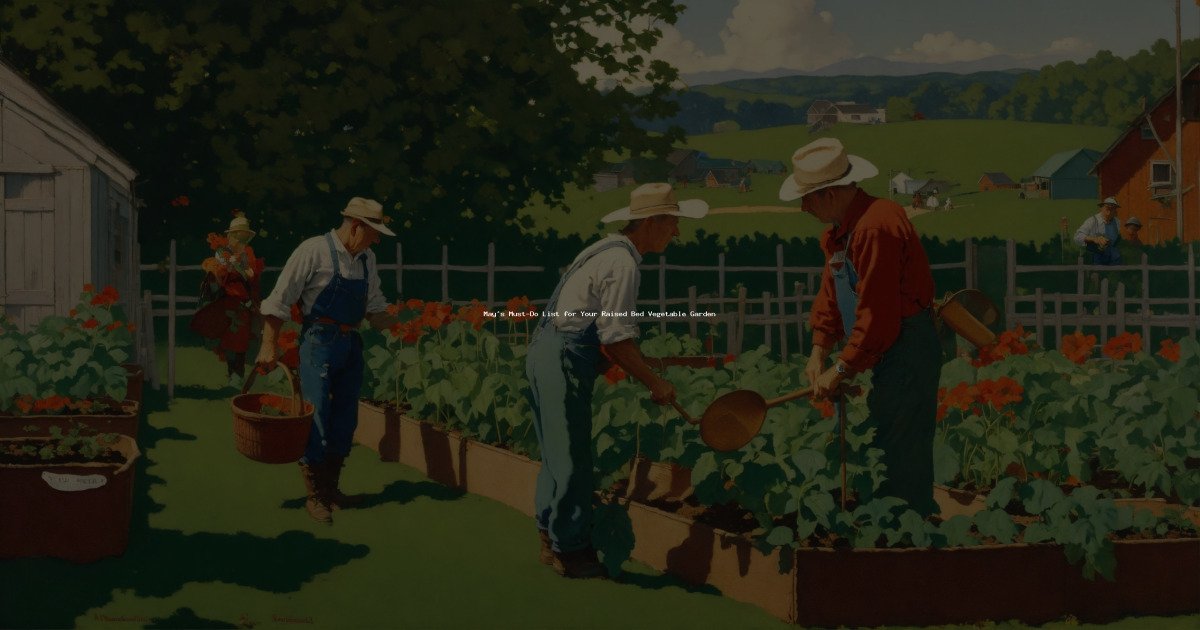
May’s Must-Do List for Your Raised Bed Vegetable Garden: Cultivate a Bountiful Harvest!
Ah, May! The birds are singing, the sun feels warmer on your skin, and the promise of a vibrant summer garden is practically tangible. For American home gardeners, especially those of us who adore the efficiency and beauty of raised beds, May isn’t just another month – it’s the crescendo of spring, the moment when all our planning and dreaming truly come to life. Whether you’re gazing out at the misty mornings of the Pacific Northwest, feeling the humid warmth building in the Deep South, anticipating the last frost in the Northeast, or preparing for the scorching sun of the Southwest, May is absolutely critical for setting the stage for a season of abundant, delicious vegetables.
Your raised beds, those carefully constructed oases of fertile soil, are practically humming with potential right now. The soil has warmed, the days are longer, and a whole host of warm-season crops are just begging to be planted. But it’s not just about getting seeds in the ground; May demands a thoughtful, proactive approach. From meticulous soil preparation to strategic planting, smart watering, and vigilant pest management, every action you take this month will directly impact the health and productivity of your garden for the months to come. We’re talking about everything from ensuring your tomatoes have the perfect trellis to giving your peppers the nutrient boost they crave.
This comprehensive guide is designed specifically for US home gardeners, taking into account the vast climatic differences across our beautiful country, from USDA Zone 3 all the way to Zone 10. We’ll dive deep into region-specific advice, highlight American-made products you can find at your local Home Depot, Lowe’s, or Amazon US, and speak in units you understand – Fahrenheit, inches, and gallons. So, grab your gardening gloves, a refreshing glass of iced tea, and let’s transform your raised beds into a powerhouse of homegrown goodness this May!
Get ready to roll up your sleeves and make this your most successful raised bed season yet. Let’s dig in!
Key Takeaways for Your May Raised Bed Garden:
- Soil is King: Test and amend your raised bed soil with quality compost and organic matter.
- Plant Smart: Focus on warm-season crops like tomatoes, peppers, and squash, respecting your local frost dates.
- Water Wisely: Deep, consistent watering is crucial, especially as temperatures rise; consider drip irrigation.
- Feed Your Plants: Provide balanced nutrients to support vigorous growth and fruit production.
- Be Vigilant: Stay ahead of pests and diseases with regular scouting and organic solutions.
- Plan for the Future: Implement trellising and succession planting for a continuous harvest.
Getting Your Beds Ready: The Ultimate Spring Soil Prep
May marks the true awakening for your raised beds, and it all starts from the ground up – literally. The soil in your raised beds is the foundation of your entire garden’s success, and taking the time to prepare it properly now will pay dividends in lush growth and abundant harvests later. Unlike in-ground gardens, raised beds offer better drainage and warmer soil earlier in the season, but they also require consistent nutrient replenishment. For our American gardeners, whether you’re dealing with the heavy clay common in parts of the Midwest or the sandy soils of Florida, May is your prime window to ensure your soil is a five-star hotel for your plant roots.
Testing Your Soil’s Health: Know Before You Grow
Before you add anything, it’s wise to know what you’re working with. A simple soil test kit, readily available at garden centers like Home Depot or Lowe’s, or online via Amazon, can tell you a lot. These kits often measure pH, nitrogen (N), phosphorus (P), and potassium (K). Most vegetables thrive in a slightly acidic to neutral pH range of 6.0 to 7.0. If your pH is off, you might need to add elemental sulfur to lower it or agricultural lime to raise it. For example, if you’re in the acidic soils of the Northeast, a lime application might be in order, while alkaline soils found in the Southwest might benefit from sulfur. Understanding your soil’s baseline helps you avoid over-fertilizing or applying amendments your plants don’t need, saving you time and money.
Amending for Success: The Nutrient Boost Your Beds Crave
Even if your soil tested perfectly last year, your plants likely depleted many nutrients. May is the ideal time for a generous top-dressing. The goal is to create a rich, loamy environment that holds moisture and nutrients but drains well. Start by gently loosening the top 6-8 inches of existing soil in your raised beds. Then, incorporate a substantial amount of high-quality organic matter. This could be well-rotted compost, aged manure, or a blend of both. For a typical 4×8 foot raised bed, adding 2-3 cubic feet of compost can make a significant difference. Many American gardeners swear by brands like Espoma Organic Compost or Black Kow Aged Manure, which are widely available. These amendments improve soil structure, enhance water retention, and provide a slow-release buffet of essential nutrients for your plants as they grow. https://ecorganicas.org/how-deep-to-plant-potatoes/
The Power of Compost: Your Garden’s Best Friend
Compost is truly black gold for your garden. It’s not just a fertilizer; it’s a soil conditioner that introduces beneficial microbes, improves drainage in heavy soils, and increases water-holding capacity in sandy soils. If you’re a composter, May is the perfect time to harvest some of that nutrient-rich goodness you’ve been brewing. Spread a 1-2 inch layer over the entire surface of your raised bed and gently work it into the top few inches. For those who don’t have their own compost pile, bagged compost from brands like Miracle-Gro Organic Garden Soil or Kellogg Garden Organics is an excellent alternative. Remember, healthy soil leads to healthy plants, which are more resilient to pests and diseases. This foundational step in May will set your raised bed up for peak performance throughout the entire growing season. https://ecorganicas.com/how-to-grow-a-tea-garden-from-leaf-to-mug/
Planting Powerhouses: What to Sow and Grow in May
With your raised beds prepped and primed, May bursts forth as the ultimate planting month for most American gardeners. The danger of frost has largely passed for many regions, and the soil temperatures are finally warm enough to welcome those beloved warm-season vegetables. This is the time to get excited about the bounty to come – the juicy tomatoes, crisp peppers, sprawling squash, and sweet corn that define a quintessential American summer garden. However, planting success in May heavily depends on understanding your specific USDA hardiness zone and average last frost date. Gardeners in the Deep South might have already planted some warm-season crops in April, while those in cooler zones like the upper Midwest or parts of the Northeast might still be waiting for Memorial Day weekend to truly kick off their planting spree.
Warm-Season Wonders: Your May Planting Stars
This is when the stars of the summer garden take center stage. For most of the continental USA, May is prime time for planting:
- Tomatoes: From cherry varieties like ‘Sungold’ to beefsteaks like ‘Brandywine’, tomatoes are a must. Plant them deep, burying a portion of the stem to encourage more root growth.
- Peppers: Bell peppers, jalapeños, and poblanos thrive in the warmth. Give them plenty of sun.
- Eggplant: A beautiful and productive addition, especially in warmer climates.
- Squash & Zucchini: Bush varieties are excellent for raised beds. Think ‘Yellow Crookneck’ or ‘Black Beauty’ zucchini.
- Cucumbers: Vining types love to climb, making them perfect for vertical growth in raised beds.
- Beans: Bush beans are quick and easy, while pole beans offer a longer harvest. ‘Blue Lake’ pole beans are a classic.
- Corn: If you have enough space, consider smaller ‘sweet corn’ varieties. Plant in blocks for better pollination.
- Melons: Watermelons and cantaloupes, especially compact varieties, can do well with proper trellising.
- Sweet Potatoes: Plant slips in the latter half of May once all danger of frost is gone and soil is consistently warm.
For gardeners in the Southwest, where summer heat arrives early, getting these plants in early May is crucial before the intense June and July sun hits. In the Pacific Northwest, patience might be key, with some gardeners waiting until late May or early June for heat-loving plants. Look for healthy starts at your local nursery or from trusted American seed companies like Burpee, Baker Creek Heirloom Seeds, or Park Seed. https://ecorganicas.org/when-to-plant-garlic/
Succession Planting for Continuous Harvest
Don’t put all your eggs (or seeds) in one basket! May is also an excellent time to practice succession planting, especially for quicker-maturing crops. This means planting small batches of the same crop every 2-3 weeks to ensure a continuous harvest rather than one massive flush. This works wonderfully for:
- Bush Beans: Plant a row every two weeks for fresh beans all summer.
- Lettuce & Greens: Even as temperatures rise, some heat-tolerant varieties can be planted in partial shade.
- Radishes: Quick turnaround, plant every week or two.
- Carrots: Sow small batches for a steady supply.
This strategy is particularly effective in raised beds where you have precise control over soil conditions and can easily rotate crops. For those in cooler zones, this extends your growing season right up to the first fall frost. For warmer zones, it helps you get harvests in before the intense summer heat causes bolting.
Starting Seeds Indoors vs. Direct Sowing: Making the Right Choice
While many warm-season crops are best transplanted as starts in May, some thrive when direct-sown into the warm soil of your raised bed. Direct sow crops like beans, corn, cucumbers, squash, and melons. Seeds for these typically germinate quickly in May’s warm soil. For crops like tomatoes, peppers, and eggplants, which have longer growing seasons and benefit from a head start, transplanting healthy seedlings (either purchased or started indoors in March/April) is usually the way to go. Make sure to harden off your transplants for about a week before planting them out permanently to help them adjust to outdoor conditions. This transition period is vital to prevent transplant shock, especially for plants that have been coddled indoors. https://ecorganicas.com/container-gardening-styling-make-pots-the-star-of-your-patio/
Hydration Heroes: Mastering May’s Watering Wisdom
As the days lengthen and temperatures climb in May, especially across much of the continental US, water becomes one of the most critical elements for your raised bed garden’s success. Raised beds, while offering superior drainage and warmer soil, can also dry out faster than in-ground gardens. This means your watering strategy needs to be on point. For gardeners in arid regions like the Southwest, consistent and efficient watering is a matter of survival for plants, while in humid areas of the Southeast, managing moisture to prevent fungal diseases is key. Understanding how much, when, and how to water will be pivotal in cultivating robust, productive plants throughout the growing season.
The Art of Deep Watering: Encouraging Strong Roots
The golden rule for watering in May, and indeed throughout the summer, is to water deeply and less frequently, rather than shallowly and often. Deep watering encourages plant roots to grow further down into the soil, making them more resilient to dry spells and heat stress. Aim to saturate the soil to a depth of at least 6-8 inches. For most raised beds, this might mean applying 1-2 inches of water per week, but always adjust based on rainfall, plant needs, and soil type. To check if you’ve watered deeply enough, stick your finger into the soil; it should feel moist several inches down. For newly planted seedlings, consistent moisture is even more critical for establishment, so you might need to water them more frequently until their root systems develop. Avoid overhead watering late in the day, especially in humid climates, as wet foliage overnight can invite fungal diseases like powdery mildew.
Drip Systems for Efficiency: A Smart Investment
For the American home gardener looking for efficiency and conservation, especially in regions prone to drought or with water restrictions, a drip irrigation system is a game-changer for raised beds. These systems deliver water directly to the plant’s root zone, minimizing evaporation and waste. You can find affordable drip irrigation kits at Home Depot, Lowe’s, or on Amazon from brands like Rain Bird or Orbit. A basic kit usually includes a pressure reducer, tubing, emitters, and connectors, and can be easily customized for your raised bed layout. Setting up a drip system in May means your plants will receive consistent hydration precisely where they need it, saving you time and ensuring optimal growth. It’s particularly beneficial for crops like tomatoes and peppers that dislike having their foliage wet. Plus, it frees you up from daily hand-watering chores!
Mulch: Your Garden’s Best Friend for Moisture Retention
Once your plants are established in May, applying a 2-4 inch layer of organic mulch around them is one of the smartest things you can do. Mulch acts as a protective blanket for your soil. It significantly reduces water evaporation from the soil surface, meaning you’ll need to water less frequently. It also suppresses weeds, which compete with your vegetables for water and nutrients, and helps regulate soil temperature, keeping roots cooler on scorching days. Excellent organic mulches for raised beds include straw, shredded leaves, or untreated wood chips. Avoid dyed mulches, which can contain chemicals. For gardeners in the hot and sunny Southwest, mulch is absolutely indispensable for keeping soil temperatures stable and conserving precious moisture. In the humid Southeast, a slightly thinner layer might be preferred to ensure good airflow, but the benefits of moisture retention and weed suppression are still immense. https://ecorganicas.org/do-plant-cells-have-mitochondria/
Nourishing Your Greens: Essential Feeding Strategies
With your plants settled into their new homes and beginning to put on some serious growth in May, their appetite will start to increase. Think of your raised bed plants like growing teenagers – they need consistent, balanced nutrition to reach their full potential. While your initial soil amendments provided a great start, the rapid growth of warm-season vegetables will quickly draw down available nutrients. This is especially true in raised beds, where nutrients can leach out more quickly due to excellent drainage. Understanding when and how to feed your plants is crucial for maximizing yield and ensuring vibrant, healthy foliage and fruit. For US gardeners, a wide array of excellent fertilizers, both organic and synthetic, are readily available to help you achieve a bountiful harvest.
Organic vs. Synthetic Nutrients: Choosing Your Path
When it comes to feeding your plants, you generally have two main approaches:
- Organic Fertilizers: These are derived from natural sources like compost, bone meal, blood meal, fish emulsion, or kelp meal. They tend to release nutrients slowly, building soil health over time and feeding the beneficial microbial life in your raised bed. Brands like Espoma, Jobe’s Organics, and Alaska Fish Fertilizer are popular choices among American organic gardeners. While they might not offer an immediate growth spurt, their long-term benefits for soil structure and sustained plant health are undeniable. They are perfect for a gentle, consistent feeding regimen.
- Synthetic Fertilizers: These are manufactured and offer precise nutrient ratios (N-P-K) that are readily available to plants. Brands like Miracle-Gro or Scotts provide quick boosts, which can be useful for plants showing signs of deficiency or for a rapid growth push. However, they don’t contribute to soil health in the same way organics do and can sometimes lead to nutrient runoff if overused. If you choose synthetic, always follow the package directions carefully to avoid burning your plants.
Many gardeners use a combination, perhaps starting with a slow-release organic granular fertilizer and supplementing with a liquid synthetic feed if plants need an extra kick.
When and How Much to Feed: Timing is Everything
The timing and amount of fertilizer depend on your plants and their growth stage.
- Initial Boost: If you didn’t heavily amend your soil with compost at planting, a light application of a balanced granular fertilizer (e.g., 5-5-5 or 10-10-10) can be beneficial a week or two after planting.
- Vegetative Growth: As plants like tomatoes and peppers are putting on leafy growth in late May, they benefit from a nitrogen boost. Consider a fertilizer with a slightly higher N number, or a dose of fish emulsion.
- Flowering & Fruiting: Once plants start to flower and set fruit, they require more phosphorus and potassium. Switch to a “bloom” or “tomato” specific fertilizer, which often has a higher P and K ratio (e.g., 2-8-4).
Always apply granular fertilizers around the base of the plant, avoiding direct contact with the stem, and then water it in thoroughly. Liquid fertilizers can be applied directly to the soil or as a foliar spray (see below). Remember, more isn’t always better; over-fertilizing can harm your plants and lead to nutrient imbalances. For raised beds, consider a slightly lighter application than for in-ground gardens, as nutrients are more concentrated. https://ecorganicas.com/10-aesthetic-plants-for-a-quiet-luxury-garden-look/
Foliar Feeding Boosts: Quick Nutrient Delivery
Foliar feeding involves spraying liquid fertilizer directly onto the leaves of your plants. This method allows plants to absorb nutrients quickly through their foliage, providing an almost immediate boost. It’s particularly useful for addressing nutrient deficiencies rapidly or giving plants a quick pick-me-up during periods of stress, like a heatwave. Diluted fish emulsion, kelp extract, or specific micronutrient sprays are excellent for foliar feeding. Always apply foliar sprays in the early morning or late evening when temperatures are cooler and the sun isn’t intense, to prevent leaf burn. This quick shot of nutrients can be a secret weapon for keeping your raised bed plants vibrant and productive throughout May and into the summer.
Pest Patrol & Disease Defense: Protecting Your Bounty
As your raised bed garden springs to life in May, unfortunately, so do the myriad of pests and potential diseases that see your lush plants as an open invitation. Vigilance is your best defense against these unwelcome guests. A proactive approach in May can prevent minor infestations from becoming major headaches that could jeopardize your entire harvest. For American gardeners, the specific pests and diseases you encounter can vary by region – from the squash bugs of the Midwest to the powdery mildew of the humid Southeast, or the aphids that seem to pop up everywhere. Regular inspection, early intervention, and an understanding of organic control methods are essential for maintaining a healthy and productive raised bed.
Identifying Common May Pests: Know Your Enemy
May sees the emergence of several common garden pests. Knowing what to look for will help you act quickly:
- Aphids: Small, pear-shaped insects often found clustered on new growth, sucking sap. They come in various colors (green, black, red). Look for sticky honeydew residue on leaves.
- Slugs & Snails: Especially prevalent in moist, cool climates like the Pacific Northwest, these leave silvery trails and chew irregular holes in leaves. They love tender young seedlings.
- Cutworms: These sneaky caterpillars wrap around the stems of young plants at the soil line and chew through them overnight, felling entire seedlings.
- Flea Beetles: Tiny, jumping beetles that chew small, round “shot holes” in leaves, especially on brassicas and eggplants.
- Squash Bugs: A major menace for squash, zucchini, and pumpkins. Adults are grayish-brown and lay clusters of copper-colored eggs on the undersides of leaves.
- Whiteflies: Tiny, white, winged insects that fly up in a cloud when disturbed. They also suck sap and excrete honeydew.
Make it a daily habit to gently lift leaves and inspect the undersides, stems, and new growth. Early detection is key!
Organic Pest Control Solutions: Gentle Yet Effective
Your raised bed is a living ecosystem, and opting for organic pest control methods helps maintain beneficial insects and soil health.
- Hand-Picking: For larger pests like slugs, snails, squash bugs, and tomato hornworms (which might appear later), simply pick them off and drop them into a bucket of soapy water.
- Neem Oil: A fantastic all-purpose organic insecticide, fungicide, and miticide. It disrupts the life cycle of many pests. Brands like Bonide or Safer Brand Neem Oil are widely available. Spray in the evening.
- Insecticidal Soap: Effective against soft-bodied insects like aphids, whiteflies, and spider mites. It suffocates them. Ensure good coverage.
- Diatomaceous Earth (DE): A natural powder made from fossilized algae. Sprinkle it around the base of plants to deter slugs, snails, and cutworms. It works by dehydrating insects, so apply when dry.
- Row Covers: For vulnerable seedlings, especially in early May, a lightweight floating row cover can physically exclude many pests while allowing light and water through. Remove for pollination once plants flower.
- Beneficial Insects: Encourage ladybugs, lacewings, and parasitic wasps by planting pollinator-friendly flowers nearby. You can even purchase ladybugs from garden suppliers to release into your garden.
For cutworms, a simple “collar” made from a toilet paper roll or cardboard around the stem of newly planted seedlings can protect them.
Free Gardening Guide – Download Now
Get our complete step-by-step PDF guide – FREE for US gardeners!
Proactive Disease Prevention: A Healthy Start
While May might be early for some severe diseases, proactive measures now can prevent problems later.
- Good Air Circulation: Space plants appropriately in your raised beds. Crowded plants encourage humidity, which is a breeding ground for fungal diseases, especially in the humid Southern and Midwestern states.
- Water at the Base: As discussed, avoid overhead watering to keep foliage dry, reducing the risk of fungal leaf spots and blights. Drip irrigation is a fantastic preventative.
- Resistant Varieties: When purchasing seeds or starts, look for varieties labeled “disease resistant” (e.g., VFFNT for tomato varieties resistant to Verticillium, Fusarium, Nematodes, and Tobacco Mosaic Virus).
- Cleanliness: Remove any diseased leaves or plant debris promptly from your raised beds to prevent spores from spreading.
- Crop Rotation: While raised beds limit space, try to rotate where you plant specific plant families each year to break disease cycles. Don’t plant tomatoes in the same spot year after year.
By staying vigilant and implementing these organic and preventative strategies in May, you can ensure your raised bed garden remains a thriving, disease-free zone, ready to produce a fantastic harvest.
Support Systems & Succession: Planning for a Bountiful Summer
May isn’t just about planting; it’s also about setting your raised bed garden up for long-term success. As your plants grow taller and heavier, many will need support to prevent breakage, improve air circulation, and keep fruit off the soil, reducing disease risk. This is particularly true for climbing vegetables and heavy fruit producers. Furthermore, wise gardeners leverage May’s ideal growing conditions to plan for continuous harvests throughout the summer and into the fall through succession planting and extending the season. Thinking ahead now, especially around key American holidays like Memorial Day, can significantly increase your overall yield and enjoyment.
Giving Your Plants a Lift: Trellises, Stakes, and Cages
Many popular raised bed vegetables are climbers or heavy producers that benefit immensely from support. Installing these systems early in May, when plants are still small, is much easier and less disruptive than trying to do it when they’re large and sprawling.
- Tomatoes: Indeterminate tomato varieties (those that continue to grow and produce until frost) absolutely require support. Tomato cages (found at any garden center like Lowe’s), stakes, or sturdy trellises are essential. Choose a cage that’s strong enough to hold a mature plant laden with fruit. Staking involves tying the main stem to a single strong stake. Trellising allows you to train vines vertically, which is great for airflow and saving space in raised beds.
- Cucumbers: These vining plants love to climb. A simple A-frame trellis or a vertical string trellis (using twine suspended from an overhead bar) works perfectly. Growing cucumbers vertically keeps them off the ground, reducing disease and producing straighter fruit.
- Pole Beans: As their name suggests, pole beans are natural climbers. Provide them with poles, teepees, or netting to scramble up. They’ll quickly cover their support structure.
- Peas: While many pea varieties are planted earlier in spring, if you’re planting a late-season crop in May (especially in cooler regions), a small trellis or netting will give them the support they need.
- Melons: Even compact melon varieties can be trellised in raised beds. You might need to provide slings (made from old t-shirts or netting) to support individual fruits as they grow heavy.
- Peppers & Eggplants: While not true climbers, heavy-fruiting pepper and eggplant varieties can benefit from a small stake to prevent branches from breaking under the weight of their produce, especially as they mature later in the summer.
Consider the mature size and weight of your plants when choosing a support system. A sturdy cattle panel or hog wire fence can make an excellent, long-lasting trellis for many years in your raised bed.
The Joys of Succession Planting: Never-Ending Harvests
May’s warm soil and longer days are perfect for kickstarting a succession planting strategy that keeps fresh vegetables coming to your kitchen table all summer long. Instead of planting all your quick-maturing crops at once, plant smaller batches every 2-3 weeks. This avoids a glut of produce and ensures a steady supply.
- Bush Beans: Plant a 2-foot row of bush beans every two weeks from mid-May until late July for continuous harvests.
- Radishes & Carrots: These root crops mature quickly. Sow a small section every 10-14 days.
- Lettuce & Greens: Even as temperatures rise, you can plant heat-tolerant lettuce varieties (like ‘Buttercrunch’ or ‘Black Seeded Simpson’) in areas of your raised bed that get afternoon shade.
- Herbs: Continue sowing cilantro, dill, and basil. Basil, especially, thrives in May’s warmth.
This strategy is particularly effective in raised beds, where you can manage small sections intensely. For example, as your early May lettuce bolt in the heat, you can pull them out, amend the soil with a bit more compost, and plant a new batch of bush beans or another quick crop.
Extending Your Harvest: Looking Ahead
While May is about spring planting, it’s also about making choices that impact your fall garden. Consider where you’ll plant crops that will produce into the cooler months. For instance, if you plant a second round of kale or Swiss chard in late May or early June, they will establish well before the intense summer heat and then thrive as temperatures cool in late summer and fall. Think about the orientation of your raised beds and how they receive sun throughout the day. In hotter climates, planting taller crops on the south side of shorter crops can provide beneficial afternoon shade as the sun strengthens. By planning ahead in May, you’re not just planting for summer; you’re building a resilient and productive garden that will keep giving back throughout the year, truly embodying the American spirit of self-sufficiency. %%INTERNAL_LINK_3%%
Essential Raised Bed Products for May
| Product | Best For | Price Range | Where to Buy | Rating (out of 5) |
|---|---|---|---|---|
| Espoma Organic Garden-tone Fertilizer | All-purpose organic feeding for vegetables | $15 – $30 | Home Depot, Lowe’s, Amazon US | 4.8 |
| Rain Bird Drip Irrigation Kit | Efficient, water-saving irrigation for raised beds | $40 – $80 | Home Depot, Lowe’s, Amazon US | 4.5 |
| Burpee Organic Seed Starter Mix | Starting seeds indoors or direct sowing small seeds | $10 – $20 | Home Depot, Lowe’s, Amazon US | 4.7 |
| Safer Brand Insecticidal Soap | Organic pest control for aphids, spider mites, etc. | $10 – $25 | Home Depot, Lowe’s, Amazon US | 4.6 |
| Gardeners Supply Co. Tomato Cages | Sturdy support for tomatoes and other vining plants | $20 – $50 (per 3-pack) | Amazon US, Gardener’s Supply Co. | 4.4 |
10+ Expert Tips for US Raised Bed Gardeners This May
- Mind Your Microclimates: Even within your own yard, some spots might be warmer or get more sun. Use these to your advantage for specific plants.
- Acclimate Transplants: Before planting, “harden off” seedlings by gradually exposing