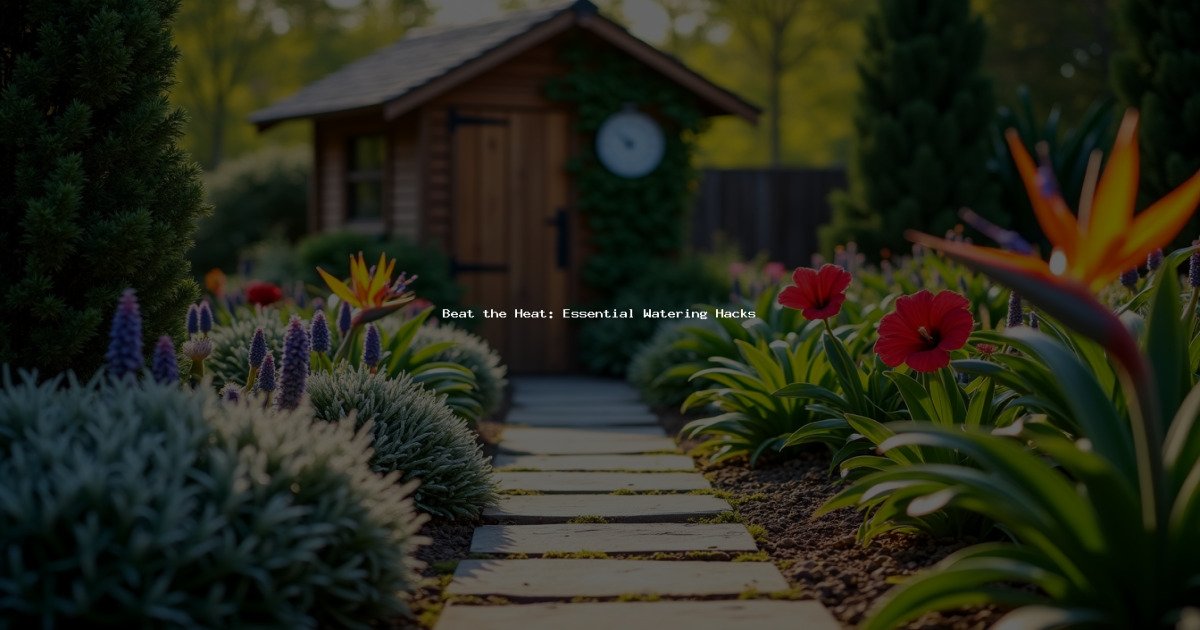
Beat the Heat: Essential Watering Hacks for a Thriving American Garden This Summer
Key Takeaways for Smart Summer Watering
- Early Morning is Prime Time: Water before the sun gets intense to maximize absorption and minimize evaporation.
- Know Your Region: From the humid South to the arid Southwest, tailor your watering strategy to your local climate.
- Deep & Infrequent: Encourage strong root growth by watering deeply rather than frequent, shallow sprinkles.
- Mulch is Your MVP: A 2-4 inch layer of organic mulch significantly reduces soil moisture loss.
- Smart Tech Saves Water: Consider drip irrigation, soaker hoses, or smart controllers for efficient delivery.
- Listen to Your Plants: Learn the signs of thirst (and overwatering) to provide exactly what they need.
Ah, June. The unofficial kick-off to summer for many of us across the continental USA. Memorial Day picnics are a fresh memory, the days are gloriously long, and our gardens are bursting with life – or at least, they should be! For American home gardeners, June also marks the start of a crucial challenge: battling the relentless summer heat. From the scorching deserts of Arizona and Nevada to the humid swelter of Florida and Texas, and even the surprisingly intense heat waves that can sweep through the Midwest and Northeast, keeping our precious plants hydrated is a full-time job.
Picture this: You step outside on a sunny 90-degree Fahrenheit morning, coffee in hand, ready to admire your flourishing tomatoes, vibrant petunias, or lush lawn. But wait, what’s that? Your prize-winning zinnias are looking a bit droopy, the pepper plants seem to have given up the ghost, and your newly planted hydrangeas are practically wilting before your eyes. It’s a common, heartbreaking scene for gardeners from USDA Zone 3 all the way down to Zone 10. We invest our time, our energy, and our hard-earned dollars from Home Depot and Lowe’s into creating beautiful, productive spaces, only to see them struggle when the mercury climbs.
The truth is, watering isn’t just about turning on the hose. It’s an art and a science, especially when the summer sun is beating down. Are you watering at the right time? Are your plants getting enough water, or perhaps too much? Is your watering technique actually helping or hindering root development? These are the questions that keep us up at night, particularly as we eye the forecast for another week of temperatures soaring into the high 80s and 90s, or even triple digits in places like California’s Central Valley or the Southeastern states. Every gallon counts, not just for your garden’s health, but for your water bill and the environment too.
This isn’t just about survival; it’s about helping your garden thrive through the dog days of summer. Whether you’re nurturing a small container garden on a Brooklyn balcony, managing acres in rural Iowa, or fending off the dry heat in a backyard oasis in Phoenix, smart watering is your secret weapon. We’re going to dive deep into essential watering hacks that will transform your summer gardening strategy. We’ll cover everything from understanding your soil to regional nuances, the latest American-made watering tech, and time-tested techniques that will make your plants resilient. Get ready to beat the heat, conserve water, and enjoy a vibrant, healthy garden all season long!
The Ultimate Guide to Understanding Your Soil’s Thirst in Summer
Understanding your soil is the cornerstone of effective summer watering. It’s not just dirt; it’s a complex ecosystem that holds nutrients and, crucially, water. Different soil types have vastly different water retention capabilities, and knowing what you’re working with can save you gallons of water and prevent both under- and overwatering. As temperatures climb in June and throughout the summer, the rate at which your soil loses moisture accelerates dramatically, making this knowledge even more vital for American gardeners.
Decoding Your Soil Type: Clay, Sand, or Loam?
Most gardens consist of a mix, but one type usually predominates. Sandy soils, common in coastal regions, Florida, and parts of the Southwest, have large particles and excellent drainage. This means water moves through them very quickly, often before plant roots have a chance to absorb it. If you have sandy soil, you’ll likely need to water more frequently, but with smaller amounts, to keep your plants hydrated. On the other hand, clay soils, prevalent in the Midwest, parts of the South, and the Northeast, have tiny, tightly packed particles. They hold water exceptionally well, sometimes too well, leading to poor drainage and waterlogged roots if not managed properly. While they don’t need watering as often, when you do water, it needs to be deep enough to penetrate the dense structure. Loamy soils are the gardener’s dream – a balanced mix of sand, silt, and clay. They drain well yet retain moisture and nutrients effectively, making them ideal for a wide range of plants. If you have loamy soil, your watering strategy will be more straightforward, focusing on deep, consistent hydration.
The Finger Test: Your Best Tool for Soil Moisture
Forget fancy gadgets – your finger is often the most reliable soil moisture sensor. Before you reach for the hose, stick your index finger about 2-3 inches deep into the soil near your plants. If it feels dry at that depth, it’s time to water. If it’s still moist, hold off. This simple test is incredibly effective for container plants and in-ground gardens alike, helping you avoid both wilting from drought and root rot from overwatering. In peak summer, especially after a particularly hot day, this check might be needed daily for some plants, while others with deeper root systems might be fine every other day.
The Power of Organic Matter
Regardless of your native soil type, incorporating organic matter is a game-changer for water retention. Compost, well-rotted manure, or leaf mold can dramatically improve the structure of both sandy and clay soils. For sandy soils, organic matter acts like a sponge, holding onto moisture and nutrients. For clay soils, it helps to break up the dense structure, improving drainage and aeration. Regular additions of organic matter, especially in spring before the summer heat hits, will make your soil more resilient and your watering efforts more efficient. This is particularly important for areas prone to intense summer droughts, like much of California and the high plains of Texas, where every bit of retained moisture makes a difference.
Regional Watering Wisdom: Tailoring Your Approach Across the USA
The continental United States is a vast country with incredibly diverse climates. A watering strategy that works in Seattle certainly won’t cut it in Miami, and what thrives in Minneapolis will likely struggle in Phoenix without significant adaptation. Understanding your region’s specific challenges and opportunities is paramount to mastering summer watering. As June ushers in peak summer conditions, gardeners across the country face unique environmental pressures.
Northeast & Mid-Atlantic: Battling Humidity and Sporadic Downpours
From Maine to Maryland, gardeners often contend with hot, humid summers punctuated by unpredictable thunderstorms. The humidity can sometimes fool us into thinking plants are well-watered when their roots are actually dry. While humidity reduces transpiration from leaves, soil moisture can still deplete rapidly, especially in sunny, exposed areas. The key here is to water deeply and less frequently, encouraging roots to grow downwards. After a heavy downpour, always check the soil before watering again – those surface puddles might not have penetrated deep enough to be truly beneficial. Keep an eye on local weather patterns, especially during heatwaves that can push temperatures into the high 90s Fahrenheit. Mulching is particularly effective here to maintain consistent soil moisture between rains and mitigate temperature fluctuations. Consider collecting rainwater in barrels during those heavy storms for later use. https://ecorganicas.com/container-gardening-styling-make-pots-the-star-of-your-patio/
The South & Southeast: Heat, Humidity, and Heavy Rain
States like Florida, Georgia, Louisiana, and Texas experience long, intensely hot, and incredibly humid summers. Daily afternoon thunderstorms are common in many areas, but these can be deceptive. While they provide a burst of moisture, the high temperatures often lead to rapid evaporation. The challenge is balancing the need for deep watering with avoiding overwatering in poorly drained soils, especially after heavy rains. Fungal diseases are also a greater risk in humid environments, making early morning watering crucial to allow foliage to dry before nightfall. Plants in this region, such as hibiscus, oleander, and many vegetables, often require substantial water. Drip irrigation or soaker hoses are excellent choices here, delivering water directly to the root zone and keeping foliage dry. The heat can be brutal, often exceeding 95°F for weeks on end, so consistent moisture is vital for plant survival.
Midwest: Extremes of Heat and Cold
The Midwest experiences true four-season weather, and summer can bring intense heat waves, sometimes reaching over 100°F, coupled with periods of drought. Winters are harsh, so plants need to be well-established and healthy to survive. In summer, the focus should be on deep, thorough watering to encourage robust root systems that can withstand both dry spells and the eventual cold. While thunderstorms are common, relying solely on rain can be risky. Check your soil regularly. Many Midwestern gardens feature large vegetable plots, which can be particularly thirsty. Consider using rain gauges to accurately measure natural rainfall and supplement as needed. Mulch is invaluable for insulating soil and reducing evaporation in the face of strong summer sun.
Pacific Northwest: From Misty to Mediterranean
While often associated with rain, the Pacific Northwest (Oregon, Washington) experiences distinct dry summers, especially inland and southwards, often resembling a Mediterranean climate. From June through September, rainfall can be scarce, and plants rely heavily on irrigation. The cool, moist springs often give way to surprisingly hot and dry July and August. Water deeply and consistently during these dry periods. Early morning watering is essential to prevent fungal issues that can arise from damp foliage in cooler evening temperatures. Drought-tolerant native plants are a smart choice here, as are efficient watering systems like drip irrigation. Even in “rainy” Seattle, summer watering is a necessity.
Southwest: Arid Climate, Extreme Heat
The Southwest (Arizona, New Mexico, Nevada, Southern California, Utah) presents the most extreme watering challenges. With temperatures frequently exceeding 100°F and very low humidity, water evaporates incredibly quickly. Water conservation is not just smart; it’s often a necessity. Focus on xeriscaping, drought-tolerant native plants (like succulents, cacti, and desert shrubs), and highly efficient watering systems. Drip irrigation is king here, delivering precise amounts of water directly to the root zone with minimal loss to evaporation. Watering should be deep but infrequent to encourage extensive root growth, allowing plants to tap into deeper soil moisture. Mulching with gravel or inorganic materials can also help reduce evaporation while blending with the aesthetic. Early morning watering is absolutely critical before the intense sun begins its work. https://ecorganicas.org/do-plant-cells-have-mitochondria/
Smart Tech & Tools: American Product Recommendations for Efficient Watering
Gone are the days when a simple hose and sprinkler were your only options. Today, American gardeners have access to an incredible array of smart tech and innovative tools designed to make watering more efficient, save water, and ultimately, save you time and effort. From your local Home Depot and Lowe’s to the vast selection on Amazon US, these products are readily available to transform your summer watering routine. Investing in the right equipment can mean the difference between stressed, struggling plants and a vibrant, thriving garden, especially as the June heat intensifies.
Drip Irrigation Systems: Precision Watering for Every Plant
Drip irrigation is perhaps the most efficient watering method, delivering water directly to the plant’s root zone, drop by drop. This minimizes evaporation, runoff, and overspray, making it ideal for vegetable gardens, perennial beds, and even container plants. Brands like Orbit and Rain Bird offer comprehensive kits that are relatively easy to install for the DIY gardener. You can find starter kits for under $100 at Home Depot or Lowe’s, often including tubing, emitters, and connectors. They’re perfect for delivering 0.5 to 2 gallons per hour directly where it’s needed, significantly reducing water waste compared to overhead sprinklers. These systems are particularly beneficial in drought-prone areas like California and the Southwest, but their efficiency makes them a smart choice nationwide.
Soaker Hoses: Gentle, Even Saturation
For rows of plants, hedges, or densely planted areas, a soaker hose is an excellent, low-tech alternative to drip irrigation. These porous hoses “sweat” water along their entire length, providing a slow, even soak directly at ground level. Brands like Gilmour and Flexon are widely available at hardware stores and on Amazon US, typically ranging from $20-$50 for a 50-foot hose. They’re fantastic for deep watering, encouraging strong root development, and keeping foliage dry, which helps prevent fungal diseases. Just lay them out, connect to your garden hose, and let them do their work. A slow, steady drip for an hour or two can be far more effective than a quick blast from a sprinkler, especially for newly planted shrubs or vegetable rows that were established after Memorial Day.
Smart Sprinkler Controllers: Watering with Intelligence
Take your watering to the next level with a smart sprinkler controller. Brands like Rachio and Hunter Hydrawise connect to your home Wi-Fi and use local weather data (temperature, rainfall, humidity) to automatically adjust your watering schedule. If rain is predicted, it skips a cycle. If a heatwave hits, it might water a bit more. Many models can be controlled via a smartphone app, allowing you to manage your irrigation from anywhere. These controllers, typically costing $150-$300 on Amazon US or at irrigation supply stores, are a significant investment but can lead to substantial water savings and healthier plants by only watering when truly necessary. Some even qualify for local water utility rebates in certain states!
Self-Watering Planters & Spikes: Container Garden Solutions
For container gardeners, especially those with hanging baskets or patio pots, self-watering planters are a lifesaver during the summer. These planters have a reservoir at the bottom that wicks water up to the soil, providing a consistent moisture supply for several days. Various brands offer these, often ranging from $15-$50 per planter at garden centers or Amazon US. Alternatively, watering spikes (like those from Terracotta or recycled plastic bottle spikes) can be inserted into the soil of existing pots, slowly releasing water from an inverted bottle. These are great for vacations or just reducing daily watering chores, ensuring your petunias and herbs don’t wilt in the intense July sun.
Proven Techniques: Watering Hacks for Resilient Summer Gardens
Knowing your soil and having the right tools are crucial, but mastering the techniques of watering is what truly sets apart a thriving summer garden from one that merely survives. These proven watering hacks will not only conserve water but also encourage stronger, healthier plant growth, helping your garden withstand the inevitable heatwaves that sweep across the American landscape in June and beyond.
The Golden Rule: Water Deeply and Infrequently
This is arguably the most important watering principle. Instead of shallow, daily sprinkles that only moisten the top inch or two of soil, aim for deep, thorough watering. A deep watering means applying enough water to penetrate 6-12 inches into the soil for most plants. This encourages plant roots to grow deeper, making them more resilient to drought and heat stress. Plants with shallow root systems are the first to suffer when the topsoil dries out. How much is enough? A good rule of thumb is about 1 inch of water per week, either from rain or irrigation, for most established plants. You can measure this with a rain gauge or by placing a tuna can in your sprinkler’s path. For newly planted specimens, especially those put in the ground after Memorial Day, more frequent, albeit still deep, watering may be needed until they establish. Remember, a long, slow soak is always better than a quick blast.
Timing is Everything: Early Morning is Best
When you water is almost as important as how you water. The absolute best time to water your garden in summer is early morning, between 5 AM and 9 AM. Why?
- Reduced Evaporation: Temperatures are cooler, and winds are typically calmer, meaning less water is lost to evaporation before it can reach the roots.
- Optimal Absorption: Plants are waking up and ready to absorb moisture before the day’s heat stresses them.
- Disease Prevention: Watering in the morning allows foliage to dry out completely before nightfall. Wet leaves overnight, especially in humid climates, create a perfect breeding ground for fungal diseases like powdery mildew.
Avoid watering in the middle of the day when the sun is highest and evaporation is at its peak. While evening watering might seem appealing, it leaves plants wet overnight, increasing disease risk. If you absolutely can’t water in the morning, late afternoon (after 4 PM) is a secondary option, giving plants a few hours to dry off before dark.
Mulch, Mulch, Mulch: Your Garden’s Best Friend
A generous layer of organic mulch is one of the most effective and easiest watering hacks. Apply 2-4 inches of wood chips, shredded bark, straw, or compost around your plants, keeping it a few inches away from stems or trunks.
- Retains Moisture: Mulch acts as a blanket, significantly reducing water evaporation from the soil surface. This means you’ll water less frequently.
- Regulates Soil Temperature: It keeps soil cooler in summer, protecting delicate roots from extreme heat, especially important in regions like the Southwest where soil temperatures can skyrocket.
- Suppresses Weeds: Weeds compete with your plants for water and nutrients. Mulch smothers them, ensuring all available resources go to your desired plants.
- Improves Soil Health: As organic mulches break down, they enrich the soil, improving its structure and water-holding capacity over time.
Mulching is a simple, cost-effective strategy that pays dividends in water savings and plant health throughout the scorching summer months. https://ecorganicas.com/how-to-grow-a-tea-garden-from-leaf-to-mug/
Watering Container Plants: A Daily Challenge
Container gardens, whether on a patio, deck, or urban balcony, dry out much faster than in-ground beds. The soil volume is limited, and the containers themselves heat up, accelerating evaporation. In peak summer heat (90°F+), many container plants will need daily watering, sometimes even twice a day.
- Check Daily: Use the finger test every morning.
- Water Until It Drains: Water slowly until you see water coming out of the drainage holes. This ensures the entire root ball is saturated.
- Consider Self-Watering Pots: As mentioned earlier, these can extend the time between waterings.
- Group Containers: Grouping pots together can create a microclimate that reduces evaporation.
- Larger Pots are Better: The larger the container, the more soil it holds, and the longer it retains moisture.
Don’t let your beautiful container arrangements wilt; they require diligent attention to watering during the summer season.
Decoding Plant Language: Signs of Thirst and Overwatering
Your plants are constantly communicating their needs to you, if you know how to listen. Learning to read their signals is a crucial skill for any American gardener, especially during the challenging summer months when heat stress and watering mistakes can quickly lead to plant decline. Identifying whether a plant is thirsty or overwatered is key to providing the right care and preventing irreversible damage. As the June sun intensifies, these observations become even more critical.
Signs of an Under-Watered Plant (Thirst)
This is often the most obvious sign, and one we’ve all seen.
- Wilting: The most classic symptom. Leaves and stems droop and look limp. This happens because the plant isn’t taking up enough water to maintain turgor pressure in its cells. However, some plants, like hydrangeas, can wilt dramatically in the afternoon sun even when adequately watered, then perk up in the evening. Always check the soil moisture before watering a wilting plant.
- Yellowing or Browning Leaves: Leaves may start to turn yellow, often beginning at the bottom of the plant, and eventually turn crispy and brown, starting from the edges. These leaves may then drop off.
- Slow Growth: Plants that aren’t getting enough water will often show stunted growth or fail to produce new leaves, flowers, or fruit.
- Dry Soil: The soil will look and feel dry several inches down. It might also pull away from the sides of pots.
- Fading Flowers/Dropping Buds: Flowers might fade prematurely, or buds may drop before opening.
If you see these signs, and the soil is dry, water immediately and thoroughly. Often, a good deep drink will revive a thirsty plant within a few hours.
Signs of an Over-Watered Plant (Root Suffocation)
Paradoxically, many of the symptoms of overwatering can look similar to underwatering, making it confusing for gardeners. However, the underlying cause is very different and often more dangerous for the plant. Overwatering suffocates roots, leading to root rot.
- Wilting (with wet soil): This is the key differentiator. If your plant is wilting but the soil is consistently wet or soggy, it’s likely overwatering. The roots, being waterlogged, can’t take up oxygen or water effectively, causing the plant to “drown.”
- Yellowing Leaves (often widespread): Leaves may turn yellow all over the plant, not just starting from the bottom. They might feel soft or mushy.
- Stunted Growth (with wet soil): Similar to underwatering, but again, the soil condition is the clue.
- Leaf Drop: Leaves may drop off, often looking yellow or brown and soft.
- Moldy or Foul-Smelling Soil: In severe cases, the soil may develop a greenish mold or an unpleasant, sour odor due to anaerobic conditions.
- Edema: Small, blister-like growths on leaves, often from inconsistent watering (too much then too little, or vice versa), but often associated with too much moisture.
If you suspect overwatering, stop watering immediately. Allow the soil to dry out completely before watering again. For potted plants, you might need to repot into fresh, well-draining soil, trimming any rotted, mushy roots. For in-ground plants, improving drainage with organic matter or creating raised beds can help for future seasons. Remember, good drainage is vital for a healthy root system. https://ecorganicas.com/container-gardening-styling-make-pots-the-star-of-your-patio/
Beyond the Hose: Advanced Strategies for Water Conservation
As American gardeners, we’re becoming increasingly aware of the importance of water conservation, especially with growing concerns about drought in many regions. Beyond efficient watering techniques, there are advanced strategies that can significantly reduce your garden’s reliance on municipal water, saving you money and being kinder to the environment. These methods are not just for the eco-conscious; they are practical solutions for anyone looking to optimize their watering efforts, particularly as summer heat puts a strain on water resources.
Rainwater Harvesting: Free Water from the Sky
One of the simplest yet most effective ways to conserve water is to collect rainwater. Installing a rain barrel (or several) under your downspouts allows you to capture precipitation that would otherwise run off your roof and into storm drains. Rainwater is naturally soft, free of chlorine and other chemicals found in tap water, making it ideal for plants.
- Installation: Rain barrels are relatively easy to install and connect to a standard garden hose. You can find them at Home Depot, Lowe’s, or online retailers like Amazon US, typically ranging from $100-$300 depending on size and style.
- Benefits: Provides a free, natural water source for your garden, reduces stormwater runoff, and lowers your water bill.
- Considerations: Ensure your barrel has a screen to prevent mosquitoes and debris. Check local regulations, as some areas have restrictions on rainwater harvesting.
A single inch of rain on a 1,000 square foot roof can yield over 600 gallons of water – imagine the savings over a summer season! This is especially beneficial in regions with predictable summer thunderstorms, like the Southeast and Midwest.
Greywater Systems: Reusing Household Water
For the more adventurous and sustainability-minded gardener, a greywater system involves diverting gently used household water (from showers, baths, washing machines, and bathroom sinks – but NOT toilets or kitchen sinks) to irrigate your landscape. This can be as simple as a laundry-to-landscape system or a more complex plumbed setup.
- Types: Simple systems can direct washing machine water to specific outdoor plants via a diverter valve. More complex systems require professional installation.
- Benefits: Dramatically reduces potable water use for irrigation, especially impactful in drought-stricken areas like California and the Southwest.
- Considerations: Use only biodegradable, plant-safe soaps and detergents. Avoid greywater on edible root crops or where direct contact with edible parts is likely. Check local building codes and regulations – greywater systems are regulated in many states.
While a bigger undertaking, greywater can provide a significant, consistent water source for mature trees, shrubs, and ornamental gardens.
Xeriscaping and Drought-Tolerant Planting
The ultimate long-term water conservation strategy is to choose plants that are naturally adapted to your region’s climate and require minimal supplemental water once established. This practice, known as xeriscaping (especially in arid regions), focuses on smart landscape design for water efficiency.
- Native Plants: Prioritize native plants that have evolved to thrive in your local rainfall patterns and soil conditions. They require less water, fertilizer, and pest control. Many American seed companies like Burpee, Baker Creek, and Park Seed offer selections suitable for various climates.
- Drought-Tolerant Varieties: Even if not native, many ornamental and edible plants are known for their low water needs. Examples include lavender, coneflowers, sedum, rosemary, certain grasses, and many succulents.
- Hydrozoning: Group plants with similar water needs together. This allows you to water specific zones more or less frequently, avoiding overwatering drought-tolerant plants or underwatering thirsty ones.
By designing your garden with water conservation in mind from the outset, you can create a beautiful, low-maintenance landscape that sips, rather than gulps, water, making your summer watering chores almost obsolete. https://ecorganicas.org/how-deep-to-plant-potatoes/
Smart Watering Solutions: Product Comparison Table
Choosing the right tools can make a significant difference in your watering efficiency and plant health. Here’s a comparison of popular watering products and techniques available to American home gardeners:
| Product/Technique | Best For | Price Range (USD) | Where to Buy | Rating (1-5 Stars) |
|---|---|---|---|---|
| Drip Irrigation System Kit | Vegetable gardens, perennial beds, container plants, new plantings. | $50 – $200+ | Home Depot, Lowe’s, Amazon US, specialized irrigation stores. | ★★★★★ |
| Soaker Hose | Rows of plants, hedges, densely planted areas, new shrub beds. | $20 – $50 | Home Depot, Lowe’s, Amazon US, local hardware stores. | ★★★★☆ |
| Smart Sprinkler Controller (e.g., Rachio) | Existing in-ground sprinkler systems, large lawns, multiple zones. | $150 – $300 | Amazon US, Home Depot, Lowe’s, irrigation suppliers. | ★★★★★ |
Self-WateringYou Might Also Like |